Newsletter Subscribe
Enter your email address below and subscribe to our newsletter
Enter your email address below and subscribe to our newsletter


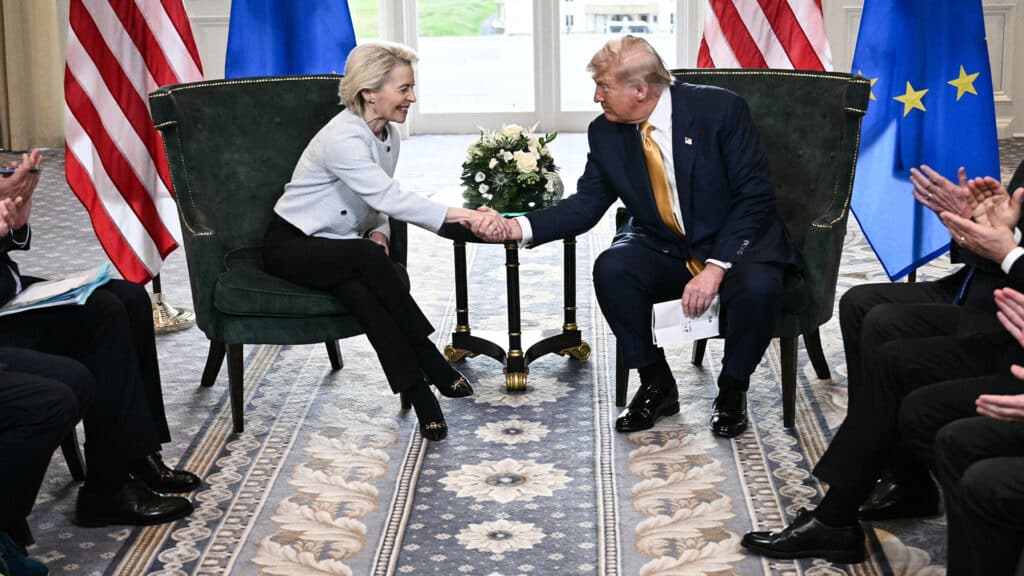
Trump & von der Leyen seal a 15 % tariff deal, averting a US‑EU trade war. Explore winners, losers & market shifts in our in‑depth July 2025 analysis.
 Tumisang Bogwasi Tumisang Bogwasi
Turnberry, Scotland – On 27 July 2025, U.S. President Donald J. Trump and European Commission President Ursula von der Leyen shook hands at Turnberry, Scotland, unveiling the most consequential trans‑Atlantic trade accord in a generation. The framework imposes a flat 15 % tariff on the lion’s share of EU exports to the United States, sidestepping the 30 % wall the White House had threatened for 1 August.
The EU, in turn, pledged $600 billion of new investment in U.S. projects and committed to ramping up purchases of American LNG and defense hardware.
Why it matters: With the U.S. and EU jointly accounting for nearly a third of global GDP and over $1.3 trillion in annual trade, the deal fundamentally recalibrates the world’s largest economic relationship. The shockwaves will re-route capital flows and force a strategic rethink in boardrooms from Tokyo to São Paulo.
The agreement sets a baseline tariff of 15 % across cars, semiconductors, pharmaceuticals and most manufactured goods—up from the pre‑Trump average of 4.8 %. Steel and aluminium keep their punitive 50 % rate, preserving the administration’s leverage in sectors it deems strategic.(reuters.com)
Trump’s July 12 ultimatum cited a $235 bn U.S. goods deficit with the EU and threatened a blanket 30 % tariff. Brussels prepared €93 bn in retaliatory duties and even floated its anti‑coercion instrument before von der Leyen flew to Scotland for last‑ditch talks.
| Pillar | United States | European Union |
| Tariff Rate | 15 % on most EU imports; 50 % on steel & aluminium | TBD reciprocal rate, with carve‑outs for aircraft, raw materials |
| Investment | — | $600 bn committed (2025‑29) |
| Energy | LNG & nuclear exports boosted by $150 bn | Long‑term offtake contracts |
| Review Clause | 18‑month performance review; option to tighten if deficit widens | Mechanism to seek sectoral exemptions |
Likely Beneficiaries
Sectors Under Pressure
For the Trump administration, the deal cements its America‑First reciprocity doctrine: allies must accept baseline tariffs unless they supply equal market access or strategic quid pro quos. For Brussels, the compromise buys time, averting an August tariff shock while the bloc grapples with sluggish growth and fragmentation over China policy.
Botswana’s copper‑nickel miners and South Africa’s steelmakers could gain indirect access as EU manufacturers look beyond the U.S. for tariff‑neutral inputs. Regional trade agencies should map HS-code overlaps now to capture diverted orders effectively.
The shift heralds a “tariff‑first” trade diplomacy that corporates must bake into five‑year cap‑ex models. Scenario planning should incorporate: