Newsletter Subscribe
Enter your email address below and subscribe to our newsletter
Enter your email address below and subscribe to our newsletter


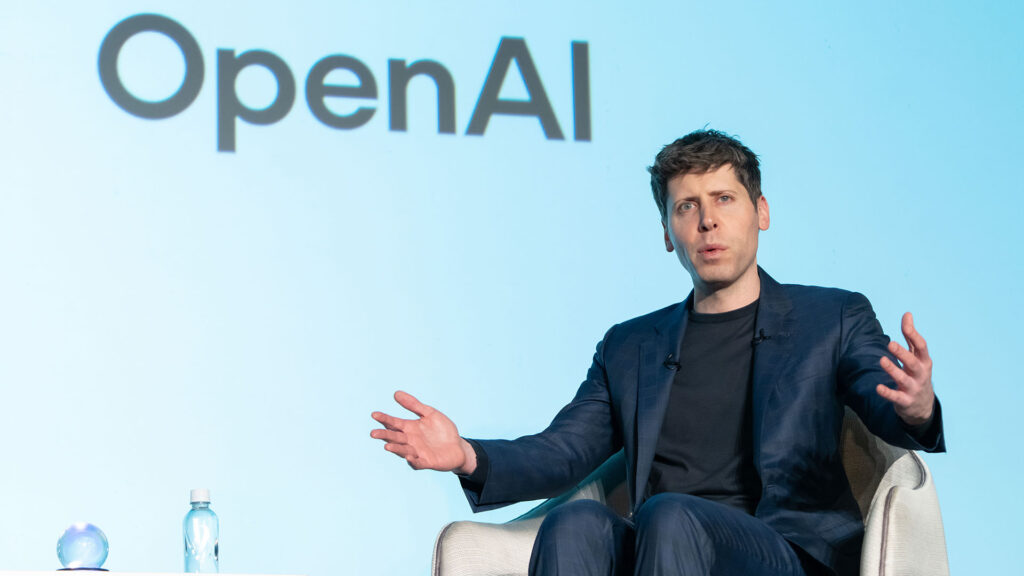
With expectations sky-high, OpenAI's foray into social networking could secure its lead in AI through direct access to dynamic user data.
 Tumisang Bogwasi Tumisang Bogwasi
OpenAI is reportedly developing its social media platform, potentially marking its boldest expansion move yet. While still in the experimental phase, insiders say a prototype already exists—centered around ChatGPT’s image generation and featuring a social feed.
If launched, the platform could put OpenAI in direct competition with both Elon Musk’s X and Meta’s forthcoming AI-powered social feed.
One of the biggest advantages social platforms hold in the AI arms race is the vast amount of data they collect. Musk’s xAI, integrated with X (formerly Twitter), and Meta’s LLaMA both rely heavily on real-time social content to train and fine-tune their models.
By creating a proprietary social network, OpenAI could tap into a rich stream of dynamic, user-generated content to further enhance ChatGPT, DALL·E, and future multimodal systems. As one AI lab insider put it: “The Grok integration with X has made everyone jealous… especially how people create viral tweets by getting it to say something stupid.”
The rivalry between OpenAI CEO Sam Altman and Tesla/X CEO Elon Musk has deepened in recent months. After Musk’s unsolicited $97.4 billion bid to purchase OpenAI was rejected, Altman fired back with a cheeky counter: “We’ll buy Twitter for $9.74 billion if you want.”
This war of words has evolved into a competition over who can better commercialize AI. By entering the social media space, OpenAI is positioning itself as a more data-independent player, rather than relying on platforms controlled by Musk or Meta for training data.
Meta is reportedly preparing to launch a standalone app for its AI assistant, which will be equipped with its social feed. As the company races to expand the utility of its LLaMA models, social content could become the battleground where large language models are differentiated and refined.
This adds another layer of urgency for OpenAI, which has, to date, focused on workplace and creative productivity use cases. A consumer-facing social app could dramatically alter that landscape.
Sources close to the project caution that OpenAI’s social app is still in early development, and there is no confirmation that it will launch publicly. However, the existence of a working prototype and Altman’s outreach to external advisors signal serious internal interest.
Whether OpenAI releases it as a new app or folds it into ChatGPT remains to be seen. The latter is particularly compelling, considering ChatGPT was the most downloaded app globally last month.
For investors, OpenAI’s exploration of a social product introduces a new dimension to the company’s value proposition. It could:
It also raises competitive pressure on Meta and X, both of which are heavily investing in AI-native social products.