Newsletter Subscribe
Enter your email address below and subscribe to our newsletter
Enter your email address below and subscribe to our newsletter


Learn how purpose-driven zoning, layered lighting, and durable materials create efficient, flexible commercial interiors aligned with contemporary needs.
 Nonofo Joel Nonofo Joel
Modern commercial interiors are designed with a clear purpose. They go beyond visual appeal to support productivity, movement, brand identity, and long-term flexibility. Offices, retail spaces, hospitality venues, and mixed-use environments must perform well while adapting to constant change. High foot traffic, evolving work patterns, and shifting customer expectations demand interiors that are both durable and adaptable. At the same time, these spaces need to feel modern without relying on short-lived trends. As a result, contemporary interior design prioritizes thoughtful planning over decoration. Layouts, materials, lighting, and functional features work together to create spaces that feel efficient, cohesive, and built for long-term use.
With this in mind, let’s explore the key elements that deserve focused attention in modern commercial interior design.
Modern commercial spaces are rarely single-use environments. A well-designed interior clearly separates areas meant for collaboration, focus, movement, and interaction without making the space feel closed off.
Zoning is achieved through layout planning, furniture placement, flooring changes, or partial partitions. Open areas encourage collaboration and flow, while quieter zones support focused work or private conversations. In retail and hospitality settings, zoning guides customers naturally through the space without relying on signage alone.
Clear zoning improves efficiency and comfort while keeping the overall environment visually open.
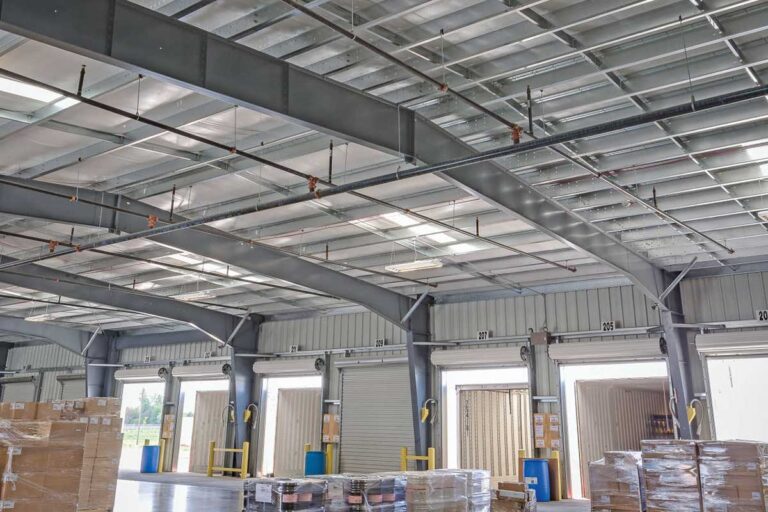
Metal door installations play an important role in modern commercial interiors. Beyond their clean, structured appearance, they help protect people, assets, and sensitive areas. In commercial spaces, metal doors are commonly used to secure staff-only zones, resist forced entry, and support controlled access systems such as keycards or biometric entry. They also help create clear security boundaries without disrupting the overall layout or flow of the space
From a performance standpoint, metal doors offer strength, durability, and reliability that other materials often cannot match. That being said, it is important to select professional companies, like CLAD, for metal door installation that deliver a much better finish to the job. Apart from trusted installations, the company goes a step further and provides all sorts of metal doors for various design types. For example:
When integrated thoughtfully into the interior plan, security-focused metal doors blend protection with structure. They help maintain a safe, organized environment while supporting long-term operational needs and modern commercial design standards.
Lighting in modern commercial interiors must support multiple activities throughout the day. A single lighting approach is no longer sufficient.
Layered lighting combines three key elements:
This approach allows spaces to adapt easily. An office can feel focused during work hours and relaxed during meetings or events. Retail spaces can guide attention toward displays without overwhelming customers.
Thoughtful lighting design improves usability while shaping the atmosphere of the space.
Commercial interiors must withstand constant use. Modern design prioritizes materials that balance appearance with performance.
Durable flooring, scratch-resistant surfaces, and easy-to-maintain finishes are essential. Designers often combine materials such as concrete, engineered wood, metal, and glass to create contrast without sacrificing longevity.
Rather than excessive decoration, modern interiors rely on material quality to define the space. This approach ensures the design remains polished even as the space ages.
Modern commercial interiors often start with neutral color palettes. Soft greys, warm whites, and muted tones create a calm foundation that works across industries.
Contrast is introduced intentionally through:
This restrained approach keeps spaces flexible and future-ready. It also allows branding elements to stand out without overwhelming the interior.
Flexibility is a core requirement in modern commercial design. Businesses grow, teams change, and usage patterns shift. Interiors must adapt without requiring complete renovation.
Movable partitions, modular furniture, and adaptable layouts allow spaces to evolve easily. Design choices are made with long-term use in mind rather than fixed arrangements.
Flexible interiors reduce downtime and protect investment while supporting changing operational needs.
Commercial interiors are a physical extension of a brand. Design choices communicate values before any interaction takes place.
Modern interior design uses layout, materials, and finishes to reflect professionalism, creativity, or approachability, depending on the business. Subtle branding elements are integrated through color accents, textures, or architectural details rather than overt signage.
When the interior aligns with brand identity, the space feels cohesive and intentional.
Modern interior design for commercial spaces is defined by specificity and purpose. Clear zoning, layered lighting, durable materials, and flexible layouts all contribute to environments that function efficiently while maintaining a refined aesthetic.
Elements such as metal door installations demonstrate how structure and design can work together without compromise. When commercial interiors are designed with precision and adaptability in mind, they support productivity, enhance experience, and remain relevant well into the future.