Newsletter Subscribe
Enter your email address below and subscribe to our newsletter
Enter your email address below and subscribe to our newsletter


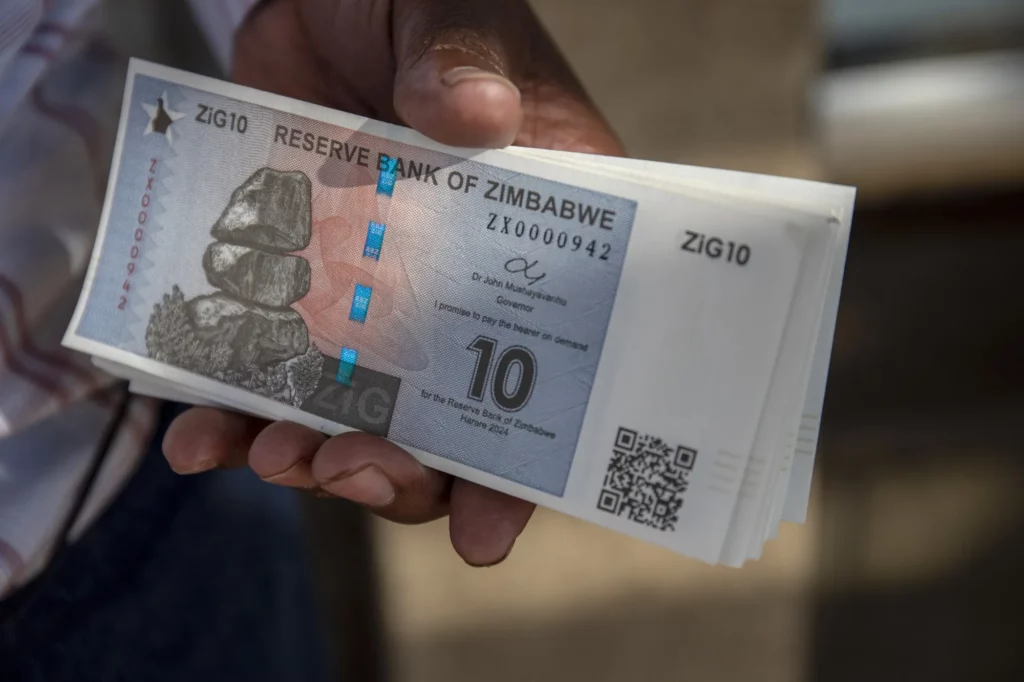
Zimbabwe’s ZiG currency posts rare gains as central bank policies take effect amid Trump’s U.S. election win.
 Tumisang Bogwasi Tumisang Bogwasi
Zimbabwe’s gold-backed currency, the ZiG, experienced its first notable rise against the U.S. dollar in more than two weeks.
This rare appreciation is largely credited to decisive actions by Zimbabwe’s central bank, which devalued the ZiG by 43% in late September and raised interest rates from 20 to 500 basis points to control inflation and manage currency volatility.
The recent adjustments have shifted the official exchange rate of the ZiG to about 27.99 against the dollar, with parallel market rates dropping from 40-50 to around 35-40. This appreciation signifies a cautious resurgence of faith in the ZiG’s stability, supported by Zimbabwe’s government efforts to establish a sustainable, reliable currency.
Zimbabwe’s Ministry of Finance is expected to announce further measures aimed at increasing the demand for the ZiG. Proposed changes include requiring the use of the currency for paying utilities, local duties, and council fees.
These interventions, in tandem with tightened monetary policies, are intended to foster a stable currency and bolster public confidence.

With Donald Trump’s victory in the U.S. presidential election, African leaders and businesses are closely assessing the potential implications for trade and economic relations with the U.S.
Trump’s known stance on protectionism may lead to heightened import tariffs on certain countries, especially those with strong trade ties to China. As China is Africa’s largest trading partner and a key financier, Trump’s policies could have a ripple effect on African economies, including Zimbabwe.
Additionally, the reauthorization of the Africa Growth and Opportunities Act (AGOA), which enables duty-free exports from Africa to the U.S., may be at risk under Trump’s administration. This shift could impact economies such as South Africa, whose goods benefit significantly from access to the U.S. market.
Conversely, Trump’s support of cryptocurrency and decentralized finance could present unique opportunities for African countries exploring fintech and digital currency initiatives, especially those like Zimbabwe working to strengthen their own currencies.
This recent upturn in the ZiG’s performance is the latest in Zimbabwe’s ongoing attempts to achieve a stable national currency.
Over the past 15 years, the country has faced repeated currency instability, including periods of hyperinflation and failed monetary reforms. The success of the ZiG now hinges on the sustained implementation of economic policies and the effective management of demand for the currency.