Newsletter Subscribe
Enter your email address below and subscribe to our newsletter
Enter your email address below and subscribe to our newsletter


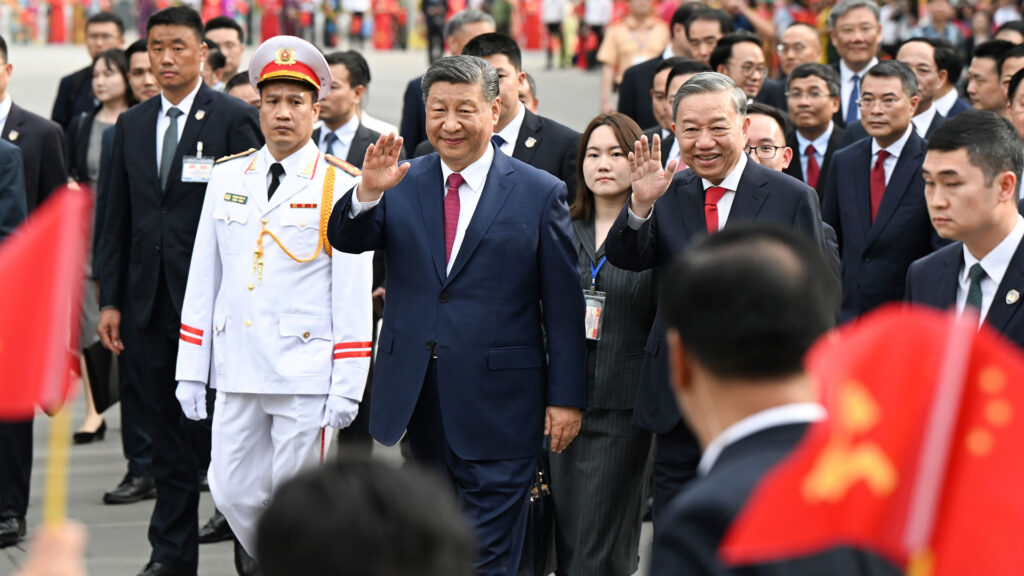
Xi Jinping strengthens China’s economic and strategic ties in Southeast Asia, countering U.S. tariffs with infrastructure investments and diplomatic initiatives.
 Tumisang Bogwasi Tumisang Bogwasi
As the U.S.-China tariff war escalates, Chinese President Xi Jinping has embarked on a highly strategic tour of Southeast Asia, casting China as a pillar of stability, economic opportunity, and regional partnership. Visiting Vietnam, Malaysia, and Cambodia in mid-April 2025, Xi reinforced China’s commitment to free trade, infrastructure development, and shared growth, positioning Beijing as a counterweight to U.S. economic coercion.
While tensions with Washington intensify, Xi is extending a hand to regional allies impacted by American tariffs, pledging deeper integration through the Belt and Road Initiative (BRI), trade deals, and security dialogues.
Xi’s trip was more than ceremonial. In Vietnam, the Chinese leader was met with a 21-gun salute and signed 45 bilateral agreements. A standout announcement was an $8 billion railway link between the two nations, bolstering China’s Belt and Road Initiative and physically tying Vietnam closer to Chinese markets and supply chains.
In Malaysia, Xi’s visit culminated in a joint statement committing to high-level strategic cooperation, including:
China and Malaysia also discussed integrating major Malaysian ports into the New International Land-Sea Trade Corridor, reinforcing trade connectivity across ASEAN.
In Cambodia—one of Beijing’s most dependable regional allies—Xi is continuing efforts to frame China as a long-term development partner. Amid Belt and Road fatigue in parts of the Global South, Cambodia has remained loyal, even as U.S. tariffs have hit its export sector hard under Trump’s “China+1” strategy.
Chinese investment in Cambodia is expected to focus on infrastructure, industrial parks, and digital connectivity, all aimed at countering U.S.-led containment.
This tour comes at a moment of high tension. President Donald Trump recently imposed 145% tariffs on Chinese imports and accused China and Vietnam of plotting to “screw the United States.”
In response, China increased its tariffs on U.S. goods to 125%, effectively taxing all bilateral trade.
Against this backdrop, Xi’s visits emphasize an alternative narrative: one of regional solidarity, mutual respect, and economic inclusion. During his visit to Malaysia, Xi warned against “unilateral bullying,” calling for Asia to reject “decoupling” and the “law of the jungle.”
The trip highlights China’s ambition to strengthen its ties with ASEAN. Foreign Minister Lin Jian confirmed that China supports Malaysia’s 2025 ASEAN Chairmanship and intends to finalize the China-ASEAN Free Trade Area Upgrade Protocol soon.
The shared goal: reject economic fragmentation, foster interconnected supply chains, and insulate the region from Western tariff regimes.

Xi’s overtures underscore China’s long-term strategy. With U.S. tariffs causing pain across Southeast Asia, Beijing is betting that its message of pragmatic partnership and economic stability will resonate. Offering infrastructure funding, trade access, and diplomatic parity, China seeks to be the region’s indispensable partner.
But this alignment comes with risks. As political analyst Oh Ei Sun noted, ASEAN states must walk a fine line between engaging China and not alienating the United States. That balancing act becomes increasingly complex as Trump continues his hard-line tariff agenda.
Xi Jinping’s April 2025 tour of Southeast Asia marks a decisive push to solidify China’s position as a trusted economic and geopolitical partner. By aligning with countries rattled by U.S. tariffs and promising tangible investments, Beijing is redefining its role in the region—from manufacturing hub to strategic anchor.
The long-term success of this pivot depends not only on promises but on delivery. If China can sustain its commitments while avoiding overextension, it may succeed in reshaping the regional order on its own terms.