Newsletter Subscribe
Enter your email address below and subscribe to our newsletter
Enter your email address below and subscribe to our newsletter


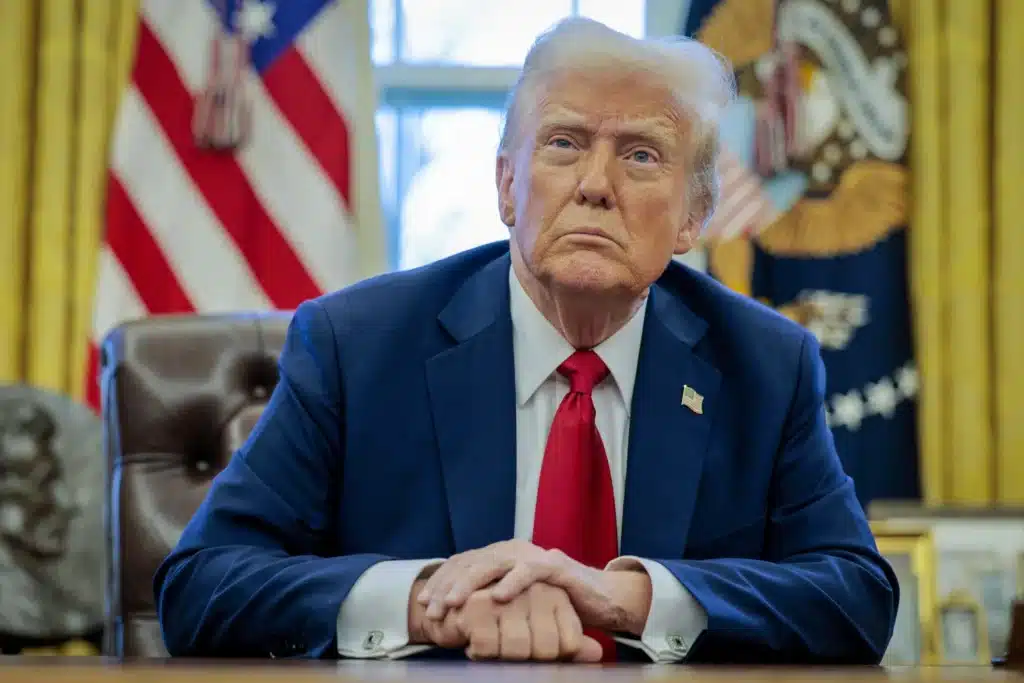
Trump’s new tariffs on Canada, Mexico, and China escalate trade tensions. Discover the economic and political fallout from this major decision.
 Tumisang Bogwasi Tumisang Bogwasi
In a move that has sent shockwaves through global markets, President Donald Trump has imposed stiff tariffs on imports from Mexico, Canada, and China. The decision, announced on Saturday, has sparked swift retaliation from these countries, exacerbating tensions and setting the stage for a full-blown trade war.
Trump justified the tariffs as necessary to “protect Americans,” particularly in curbing the production and export of illicit fentanyl and addressing illegal immigration from Canada and Mexico.
However, the economic fallout could be severe, with experts warning of heightened inflation, supply chain disruptions, and global economic instability.
Trump declared an economic emergency to justify the new trade barriers, imposing a 10% tariff on all Chinese imports and a 25% tariff on imports from Mexico and Canada. Notably, energy imports from Canada, including oil, natural gas, and electricity, will be taxed at a 10% rate.
A key feature of the policy is a mechanism to escalate tariffs in response to retaliatory measures, further fueling concerns about an extended trade war and its economic impact.
In response, Canadian Prime Minister Justin Trudeau announced retaliatory tariffs of 25% on $155 billion worth of U.S. imports, targeting alcohol, fruit, and other key industries.
Mexico’s President Claudia Sheinbaum also issued a firm response, rejecting U.S. accusations that Mexico harbors criminal organizations.
While Trump views tariffs as an essential tool for economic protectionism, the long-term impact could be significant. The new import taxes on computer chips, steel, oil, and pharmaceutical drugs could trigger global backlash.
Meanwhile, Trudeau encouraged Canadians to buy locally, emphasizing that choosing Canadian products over American goods could help mitigate the economic fallout. Despite the tensions, he maintained optimism about the future of U.S.-Canada relations.
Trump’s aggressive tariff policy has opened a new front in the global trade war, testing the resilience of U.S. economic and diplomatic relations. With Canada, Mexico, and China all retaliating, the question remains: Will these protectionist measures ultimately help or harm the U.S. economy?
The coming months will determine whether this strategy strengthens U.S. manufacturing or plunges the global economy into further uncertainty.