Newsletter Subscribe
Enter your email address below and subscribe to our newsletter
Enter your email address below and subscribe to our newsletter


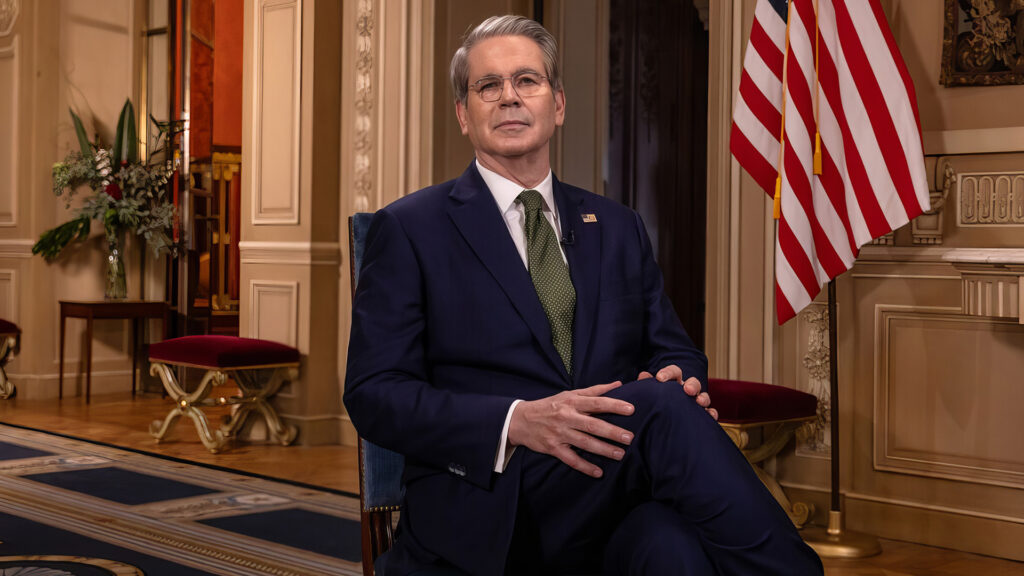
Treasury Secretary Scott Bessent backs Argentina’s reforms and outlines U.S. strategy on tariffs, China, and bond markets.
 Tumisang Bogwasi Tumisang Bogwasi
In an exclusive interview in Buenos Aires, U.S. Treasury Secretary Scott Bessent outlined the Trump administration’s evolving approach to international trade, monetary policy, and global alliances. With Argentina’s new IMF agreement, tariffs at historic highs, and global markets reacting sharply, Bessent’s comments provide rare insight into the United States’ current economic posture.
Bessent’s visit to Argentina marks a critical moment as the nation embarks on a third economic adjustment involving fiscal tightening, monetary reform, and currency realignment. The U.S. is backing Argentina’s efforts to stabilize under President Milei, noting a $20 billion IMF package and additional World Bank support. This is the first Treasury Secretary visit since the Trump administration’s G20 appearance in 2018.
“What President Milei is doing is historic,” said Bessent, endorsing the reforms as a path away from long-standing debt crises.
In a significant development, the Trump administration has implemented a 90-day tariff pause for more than 70 countries that have not retaliated against U.S. tariffs. Negotiations are moving quickly, with Japan, Vietnam, and South Korea among the early movers.
Bessent emphasized the reciprocal nature of the policy:
“These are maximum rates. If countries don’t retaliate, they stay low. If they do, we escalate.”
This deliberate strategy rewards diplomatic cooperation and penalizes unfair trade practices. The focus is not only on tariffs, but also non-tariff barriers, currency manipulation, and state subsidies, which the administration sees as central to restoring fair trade.
Bessent sharply contrasts U.S. and Chinese foreign investment, particularly in Latin America and Africa. He criticized Beijing’s opaque lending practices, stating:
“We’re trying to prevent what happened in Africa—debt traps masked as aid.”
Argentina’s $18 billion RMB currency swap with China remains under scrutiny. While the current administration isn’t demanding its removal, Bessent expects Argentina’s foreign exchange position to strengthen enough to unwind the arrangement.
Asked whether U.S.-China trade is headed for decoupling, Bessent responded:
“There doesn’t have to be [a decoupling]. But it will require a special kind of formula.”
He emphasized the unprecedented nature of the challenge:
“China is both our biggest economic competitor and our biggest military rival.”
The administration sees China’s business model as one of overproduction and global dumping. Bessent warned that if left unchecked, Chinese goods would likely flood into the Global South and G7 economies.
Responding to concerns about recent bond market turmoil, Bessent dismissed the idea of mass sovereign selling:
“It’s not sovereign dumping. It’s leverage unwinding and risk repositioning by hedge funds.”
He reaffirmed America’s strong dollar policy, and cited robust foreign participation in recent bond auctions as a sign of confidence. Bessent also highlighted the Treasury’s toolkit:
As speculation mounts about Fed Chair Jerome Powell’s future, Bessent downplayed concerns about politicization, emphasizing the need to preserve the Fed’s independence in monetary policy while leaving room for regulatory discussion.
“Monetary policy is a jewel box—it must be preserved.”
He expects candidate interviews for the next Fed Chair to begin in fall 2025.
Beyond trade, Bessent signaled that the administration’s next focus areas are tax cuts and deregulation. He cited strong Republican unity around renewing and expanding the Tax Cuts and Jobs Act (TCJA).
“There will be more than just changing the expiration date.”
He described the Trump agenda as a three-legged stool: tariffs, tax cuts, and deregulation.
Scott Bessent’s comments from Buenos Aires signal a decisive, fast-moving approach to global trade rebalancing, combined with fiscal restructuring and capital market stability. With simultaneous action on tariffs, tax, and regulation, the Trump administration aims to strengthen U.S. economic leadership and curb the rise of unfair competition—especially from China.