Newsletter Subscribe
Enter your email address below and subscribe to our newsletter
Enter your email address below and subscribe to our newsletter


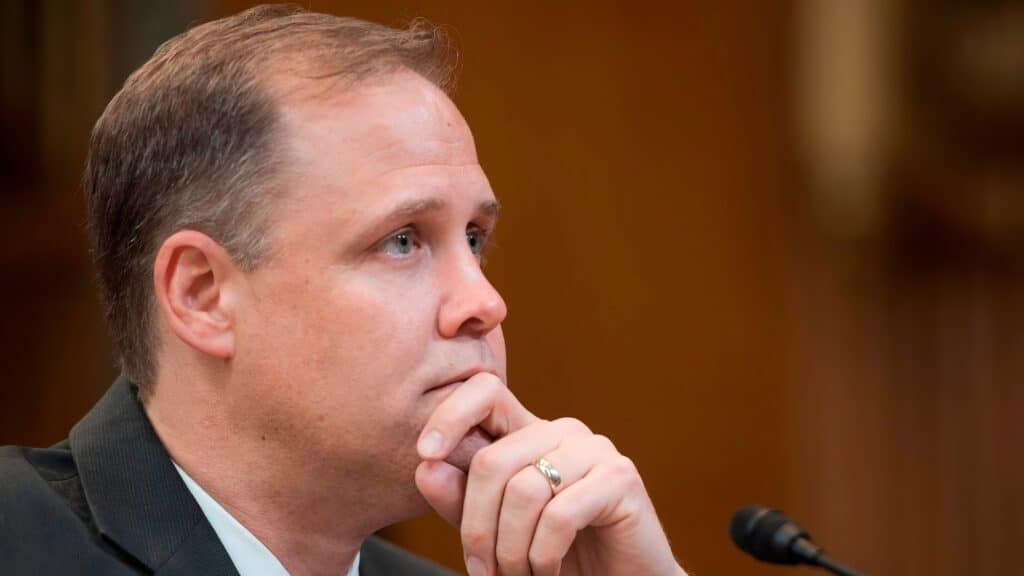
Former NASA Chief Jim Bridenstine warns of growing Chinese threats to U.S. space assets, citing the critical role of the U.S. Space Force.
 Tumisang Bogwasi Tumisang Bogwasi
In a stark warning that extends beyond terrestrial borders, former NASA Administrator Jim Bridenstine emphasized the growing threats to U.S. space infrastructure posed by China and Russia.
Speaking on Fox News, Bridenstine highlighted how space has become the new frontier for both economic resilience and national defense, urging the public and policymakers to recognize the vulnerabilities and strategic imperatives emerging in orbit.
Bridenstine stressed that space is not just the realm of astronauts and satellites—it underpins critical facets of daily American life. From GPS signals and banking transactions to national power grids and missile warning systems, the modern economy and national defense apparatus rely heavily on stable space operations.
“Whether it’s banking or missile warning, our lives are dependent on what’s happening in space.”
Central to this effort is the U.S. Space Force base in Greenland. This installation plays a key role in missile detection and orbital monitoring, especially over the North Pole region, a strategic corridor for global satellite movement.
Control and surveillance over this domain are essential for maintaining a resilient space-based infrastructure.
China has been closely monitoring U.S. military operations for decades, particularly how American forces utilize space for intelligence, precision strikes, and logistics. In response, Beijing has developed an array of space-denial tools:
These efforts represent a concerted strategy to nullify America’s asymmetric advantage in space.
Bridenstine credited President Donald Trump for the establishment of the U.S. Space Force, asserting that the decision was a pivotal shift in military preparedness.
“It wouldn’t have happened without President Trump’s vision… and he got it done faster than you could imagine.”
The Space Force serves as a dedicated branch to counter threats in orbit and ensure that the U.S. remains agile and equipped in an increasingly contested domain.

Beyond space, China’s fixation on Taiwan is driven largely by the island’s control over advanced semiconductor manufacturing. Any Chinese move to seize Taiwan would necessitate blocking U.S. intervention. This is where Beijing’s development of stealth systems, hypersonic missiles, and orbital warfare capabilities comes into play.
Bridenstine emphasized the strategic importance of U.S. dominance in stealth, undersea warfare, and space, which is necessary to penetrate China’s “anti-access/area-denial” (A2/AD) systems and safeguard Taiwan.
The United States is no longer merely competing in space; it is being actively challenged. The peaceful use of space is under threat from adversaries seeking asymmetric advantages.
Bridenstine’s message is a call to arms—not in a conventional sense, but in a strategic pivot toward defending the celestial infrastructure that undergirds national power.