Enter your email address below and subscribe to our newsletter

A spacex dragon spacecraft in orbit with its solar arrays extended flying above earths cloud covered surface

SpaceX Said to Pursue 2026 IPO Raising Far Above $30B

SpaceX is said to be preparing for a historic 2026 IPO that could raise far above $30B, driven by Starlink’s expansion and unprecedented investor interest.

Written By: author avatar Tumisang Bogwasi
author avatar Tumisang Bogwasi
Tumisang Bogwasi, Founder & CEO of Brimco. 2X Award-Winning Entrepreneur. It all started with a popsicle stand.

Share your love

SpaceX (the world’s most valuable private aerospace company) is reportedly preparing for a historic 2026 IPO, with expectations that the offering could raise well beyond $30 billion, dwarfing traditional tech and aerospace listings.

According to emerging industry reports and analyst commentary, SpaceX intends to spin out a portion of its satellite internet division, Starlink, while preserving tight founder control over its broader space-launch and deep‑space programs.

If confirmed, this would be the largest and most transformative tech‑aerospace IPO in history, redefining global capital markets and accelerating the commercial space race.

Highlights

  • SpaceX is reportedly preparing a 2026 IPO, potentially raising far more than $30B.
  • Listing expected to involve Starlink, while SpaceX’s core launch business remains private.
  • Potential valuation could exceed $250–300B, depending on market conditions.
  • Investor demand expected to be unprecedented due to Starlink’s global expansion.
  • IPO could reshape capital markets and set new funding standards for aerospace innovation.

Why SpaceX Is Considering a 2026 IPO

While Elon Musk has long resisted public markets due to quarterly‑results pressure, several forces now make a 2026 IPO strategically compelling:

  • Starlink’s global maturity: With millions of users and government contracts, Starlink is now a cash-generating business.
  • Capital requirements: Deep‑space programs (Starship, Mars missions, lunar lander) require tens of billions in long-term financing.
  • Market timing: High investor demand for AI‑adjacent and frontier‑tech assets could maximize valuation.
  • Reducing internal liquidity pressure: Employees and early investors need exit opportunities.

Starlink (SpaceX’s low‑Earth‑orbit (LEO) satellite constellation) has become the company’s economic backbone.

A close up view of spacex satellite hardware in low earth orbit with the sun shining brightly against the blackness of space and earths curve visible below
A SpaceX low Earth orbit LEO satellite segment captures sunlight as it orbits above Earth highlighting the scale and precision of modern space based communications infrastructure

Key strengths fueling IPO appeal:

  • Global broadband footprint across 70+ countries.
  • Critical infrastructure status for defense, disaster recovery, and remote connectivity.
  • Recurring subscription revenue, unlike SpaceX’s launch‑cycle variability.
  • High-margin enterprise and government deals are accelerating rapidly.

Analysts believe Starlink alone could justify a valuation of $150–180B, making a partial spin-out highly attractive.

Market Reaction: Why Investors Are Hyped

Even without formal confirmation, the market is buzzing. Analysts view SpaceX’s IPO as:

  • The closest public proxy to investing in Elon Musk’s deep‑tech empire.
  • A rare high-growth infrastructure asset with global reach.
  • A gateway to future markets, including lunar logistics, asteroid mining, and planetary communications.

Institutional investors (including sovereign wealth funds and pension giants) are expected to compete aggressively for allocation.

Competitive Position: SpaceX Dominates the Space Economy

SpaceX maintains overwhelming leadership in:

  • orbital launches (Falcon 9, Falcon Heavy),
  • reusable rocket technology,
  • satellite internet infrastructure,
  • deep‑space transport (Starship).

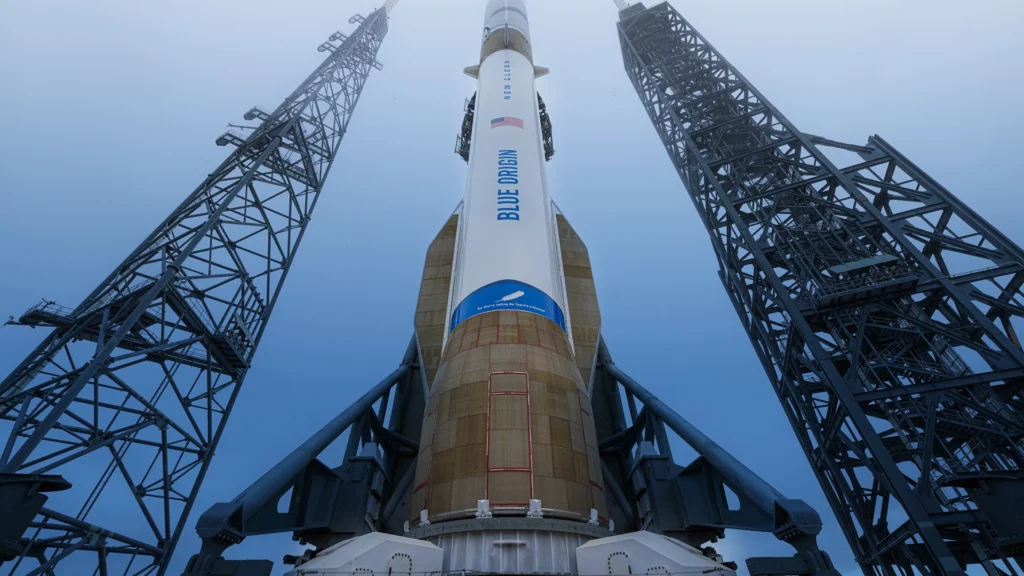
No competitor (including Blue Origin, Arianespace, ULA, or China’s Long March program) matches its launch cadence or cost efficiency.

A spacex falcon 9 rocket lifting off from its launch pad with bright exhaust flames and a plume of white smoke against a clear blue sky
SpaceXs Falcon 9 rocket powers off the launch pad showcasing reusable rocket engineering and Americas return to high frequency orbital launches

Risks and Obstacles Before the IPO

Despite enthusiasm, several hurdles remain:

  • Regulatory complexity: A hybrid public–private governance structure must satisfy both investors and national security standards.
  • Geopolitical pressures: Starlink’s use in Ukraine and other conflict zones raises scrutiny.
  • Execution risk: Starship’s success is essential for long‑term valuation.
  • Market volatility: 2026 macro conditions could dramatically influence IPO appetite.

Could This Be the Biggest IPO of All Time?

Potentially,  yes.

At expected valuations above $300B, a Starlink-led SpaceX IPO could:

  • surpass Alibaba’s and Saudi Aramco’s landmark offerings,
  • set new pricing benchmarks for frontier technology companies,
  • trigger a wave of aerospace and satellite‑industry listings.

SpaceX’s IPO would mark the moment when commercial space shifted from niche aspiration to global industrial pillar.

Outlook: SpaceX Is Defining the Future of Markets and Space

Whether Starlink lists in 2026 or later, one truth stands out: SpaceX is building the most valuable space‑infrastructure platform in human history.

A public listing would grant SpaceX financing power on a scale no aerospace company has ever seen, accelerating humanity’s transition toward multi‑planetary capability.

The world’s largest IPO may soon belong not to oil, banks, or software — but to a space company rewriting the future.


Tumisang Bogwasi
Tumisang Bogwasi

Tumisang Bogwasi, Founder & CEO of Brimco. 2X Award-Winning Entrepreneur. It all started with a popsicle stand.