Newsletter Subscribe
Enter your email address below and subscribe to our newsletter
Enter your email address below and subscribe to our newsletter


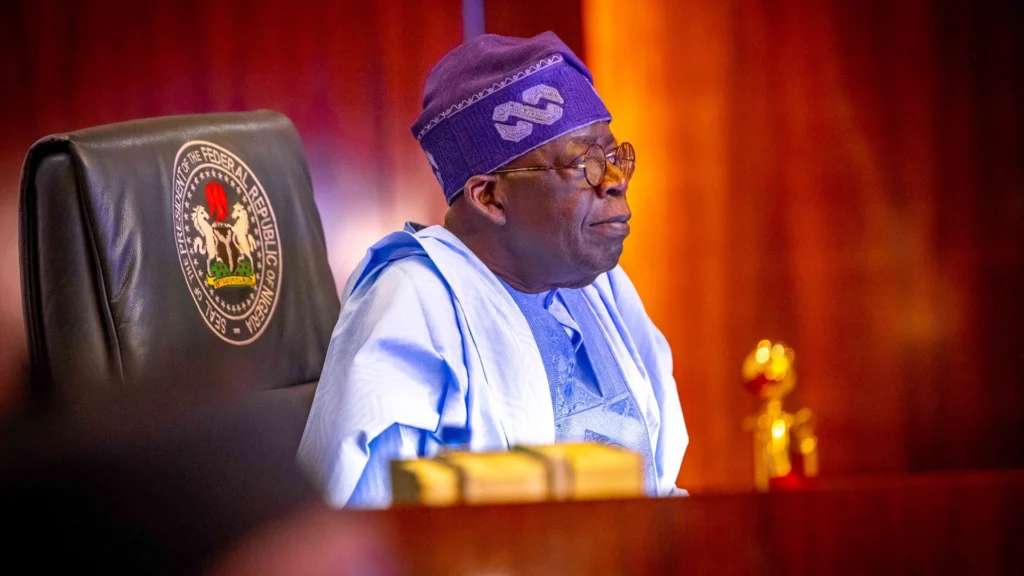
The Petroleum Industry Act (PIA) was meant to reform Nigeria’s oil and gas sector, including enforcing a 15% fuel import tax to boost local refining and government revenue. However, regulators’ failure to apply the law highlights systemic policy gaps, weak enforcement, and the ongoing challenges in implementing economic reforms.
 Tumisang Bogwasi Tumisang Bogwasi
Nigeria’s surprise 15% import duty on petrol and diesel has ignited a fierce debate across energy and capital markets. The federal government says the tariff will protect domestic refining and energy security; critics counter that it is a policy band‑aid made necessary by regulators’ failure to enforce the Petroleum Industry Act (PIA, 2021).
As Arise News analyst Kelvin Emmanuel argues, if the PIA’s downstream rules, pricing, quality, licensing, and competition had been applied consistently, Abuja would not have needed a blunt import levy to fix market distortions.
Highlights
The PIA (2021) was designed to end ad‑hoc interventions by replacing opaque controls with rules‑based governance in downstream markets. It:
In practice, enforcement gaps (from quality checks to license discipline and retail pricing oversight) allowed cheaper imports (and occasionally sub‑spec fuel) to undercut local output. Rather than trust the rulebook, Abuja reached for a tariff to force the re‑balancing. It may work in the short term; it is not a substitute for consistent PIA enforcement.
Industry Insights: How the 15% Duty Rewires Incentives
1) Refining economics: A 15% duty narrows the import parity advantage and improves domestic margin capture. For a modern complex refinery (e.g., Dangote), tariff-adjusted parity can tilt liftings toward local supply, especially on diesel and jet where regional deficits are widest.
2) Competition risk: Without active NMDPRA oversight (open access to terminals, transparent pricing, and non-discriminatory lifting) the tariff could entrench a quasi-monopoly and raise long-run prices. The PIA anticipated this by empowering regulators to prevent abuse of dominance.
3) FX & inflation: Higher pump prices increase transport and food costs, pressuring inflation and the naira near term. Over time, import substitution can save FX and stabilize the current account; if domestic plants run reliably and logistics (pipelines, depots, retail) are efficient (Premium Times).
4) Regional trade: Additional Nigerian product can shorten ton‑miles into West/Central Africa and partially replace longer‑haul imports from Europe and Asia, smoothing supply shocks.