Enter your email address below and subscribe to our newsletter
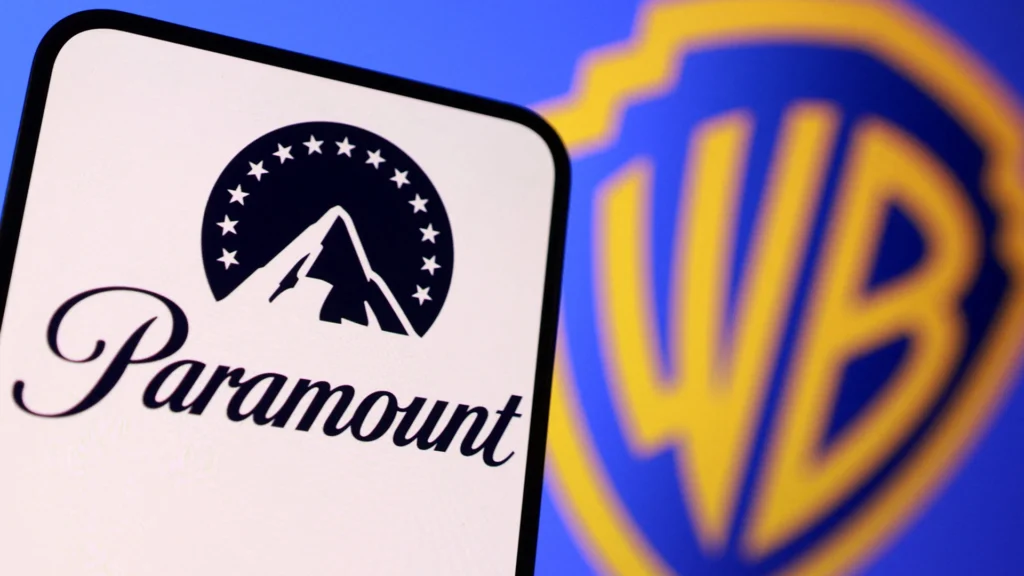
Paramount makes US$108 billion bid for Warner Bros.
Paramount’s hostile bid for Warner Bros. marks a dramatic escalation in Hollywood’s consolidation wars, raising questions about competition, strategy, and the future of streaming.
Written By: Tumisang Bogwasi
Tumisang Bogwasi
Tumisang Bogwasi, Founder & CEO of Brimco. 2X Award-Winning Entrepreneur. It all started with a popsicle stand.
In a stunning escalation of Hollywood’s consolidation wars, Paramount Global has launched a hostile takeover bid for Warner Bros. Discovery (WBD) at $30 per share, valuing the company at $108.4 billion in enterprise value, a dramatic increase over Netflix’s earlier $82.7 billion bid.
This aggressive offer directly challenges Netflix’s already-announced acquisition plan and signals Paramount’s strategic determination not just to survive, but to reverse its own trajectory and disrupt the biggest media merger of the decade.
The bid also arrives with a powerful financing coalition behind it, including backing from Larry Ellison, RedBird Capital, Affinity Partners (linked to Jared Kushner), and sovereign wealth funds from Saudi Arabia, Qatar, and Abu Dhabi, signaling both geopolitical and financial weight.
Highlights
Paramount launches a hostile $30/share all-cash bid, valuing WBD at $108.4B.
Bid designed to block Netflix’s previously announced $27.75/share mixed offer.
Backed by Ellison, RedBird Capital, Affinity Partners, and Gulf sovereign wealth funds.
WBD board expected to resist; analysts say timing targets WBD’s weakness.
Regulatory scrutiny expected given massive consolidation and news/sports overlap.
Paramount launches hostile takeover bid for Warner Bros. at $30 per share.
Deal would combine two major Hollywood studios into a single entertainment giant.
WBD board expected to resist, calling the offer opportunistic.
Consolidation pressures accelerate as streaming competition tightens.
Regulators likely to scrutinize the deal due to market concentration concerns.
Why Paramount Is Making This Move
Paramount’s hostile offer is not just strategic, it is existential. The company has long been considered an acquisition target. By launching this bid, Paramount is attempting to flip the script and become the consolidator instead of the consolidated.
Key motivations include:
Blocking Netflix: Paramount knows that if Netflix secures Warner Bros., it becomes virtually untouchable.
Buying time and relevance: Paramount+ cannot compete at current scale; Warner’s HBO, DC, and theatrical pipelines would transform its fortunes.
Creating a counterweight to Big Tech: Disney, Amazon, Apple, and Netflix increasingly dominate entertainment.
Investor pressure: Paramount’s shareholders want decisive action, not defensive downsizing.
Bloomberg analysts frame this as a “do-or-die play”; Paramount must consolidate or face irrelevance.
Key motivations include:
Survival under streaming pressure as Netflix, Disney, and Amazon dominate market share.
Expanding its content library with Warner Bros.’ deep catalog; from DC to HBO to global cinematic classics.
Achieving scale necessary to compete in a world where only a handful of mega-platforms can survive.
Unlocking cost synergies across production, distribution, and technology operations.
Paramount (long considered a takeover target itself) is attempting a bold reversal: becoming the acquirer.
What Warner Bros. Stands to Lose… or Gain Stands to Lose… or Gain
Warner Bros. Discovery is equally under pressure:
Declining linear TV revenue.
Struggling streaming economics.
Heavy debt burdens.
Investor frustration with inconsistent strategy.
Yet Warner Bros. still holds some of Hollywood’s most valuable IP:
DC Universe
Harry Potter
Game of Thrones / HBO
Suicide Squad, Dune, The Matrix, Looney Tunes
A Paramount acquisition could lead to:
large-scale layoffs,
catalog consolidation,
merger of Paramount+ and Max,
major restructuring of both studios.
Why the Bid Is Hostile, and Why It’s Aimed Directly at Netflix
Paramount’s offer is hostile because:
It bypasses the WBD board entirely.
It appeals directly to shareholders with a higher, simpler, all-cash offer.
It seeks to disrupt Netflix’s carefully structured cash+stock bid.
The strategic messaging is clear:
Paramount wants to convince shareholders that Netflix’s offer undervalues WBD, and that Paramount’s structure is:
faster to close,
cleaner to execute,
backed by deeper external financing.
The company is taking advantage of the regulatory uncertainty around Netflix’s takeover (including antitrust concerns, union objections, and political scrutiny) to position its offer as the safer alternative. Paramount’s offer is considered hostile because:
It bypasses Warner Bros.’ board.
It appeals directly to shareholders.
It positions WBD leadership as failing to create value.
Analysts say Paramount is attacking during a moment of weakness, WBD’s stock performance has sagged, and sentiment is low.
Industry Reaction: Shockwaves Across Hollywood
Hollywood insiders describe Paramount’s move as “one of the boldest gambits in modern studio history.” The bid has triggered immediate reactions:
Analysts say:
Paramount is attempting a hostile rescue merger.
Netflix’s dominance would be threatened if Paramount succeeds.
Disney now faces increased pressure to respond.
Amazon and Apple could enter counterbids.
Unions are pushing back , but mainly against Netflix
Major Hollywood unions have publicly signaled concerns about Netflix’s acquisition, citing:
job consolidation risks,
reduced bargaining power,
loss of traditional theatrical pipelines.
Paramount is leveraging this by framing its bid as more aligned with the “traditional Hollywood ecosystem.”
Political friction rising
Donald Trump has publicly signaled antitrust concerns about Netflix + Warner, creating uncertainty around regulatory approval and indirectly strengthening Paramount’s argument.
Regulatory Concerns
A Paramount–WBD merger would also face significant regulatory scrutiny, but analysts argue it may be less complex than Netflix’s attempt.
Areas of concern include:
market concentration in film and TV distribution,
Nickelodeon + Cartoon Network overlap,
sports and news consolidation implications.
However, Paramount is emphasizing that:
its backers will have no board seats,
no foreign entities will hold governance control,
the structure reduces long-term antitrust risk compared to a tech giant takeover. A Paramount–WBD merger would trigger intense scrutiny from:
U.S. DOJ,
FTC,
EU regulators,
UK CMA.
Concerns include:
excessive market concentration,
reduced competition in film and TV distribution,
dominance in children’s programming (Nickelodeon + Cartoon Network),
consolidation of news and sports assets.
Regulators may demand:
divestitures,
structural remedies,
limitations on exclusive distribution.
Could This Really Happen?
Industry experts are divided.
Reasons the deal could succeed:
The offer is financially superior to Netflix’s bid.
Shareholders frustrated with WBD leadership may support it.
Netflix’s deal faces heavy regulatory and political resistance.
Paramount’s financing partners bring massive capital resources.
Reasons the deal could fail:
WBD board is likely to reject the proposal outright.
Regulators may still fear studio concentration.
Paramount’s balance sheet is significantly weaker than WBD’s.
A rival white knight (Amazon, Apple, Comcast) could enter.
Regardless of the outcome, Paramount has already succeeded at one thing: destabilizing the Netflix–WBD merger timeline.? Industry experts say:
The offer is aggressive but unlikely to proceed without a counteroffer or defensive move.
WBD may seek a white knight, such as Amazon or Comcast.
Private equity may enter the picture.
Still, Paramount’s hostile bid signals desperation, and ambition.
Outlook: A Battle for Hollywood’s Future
If Paramount succeeds, the merger would create a combined entity with:
a massive global content library,
powerful streaming assets,
strengthened IP pipelines,
a more competitive position against Big Tech.
If it fails, it still triggers a competitive scramble.
Either way, the bid marks a watershed moment: Hollywood is entering its final consolidation phase.
Tumisang Bogwasi
Tumisang Bogwasi, Founder & CEO of Brimco. 2X Award-Winning Entrepreneur. It all started with a popsicle stand.



 Tumisang Bogwasi