Newsletter Subscribe
Enter your email address below and subscribe to our newsletter
Enter your email address below and subscribe to our newsletter


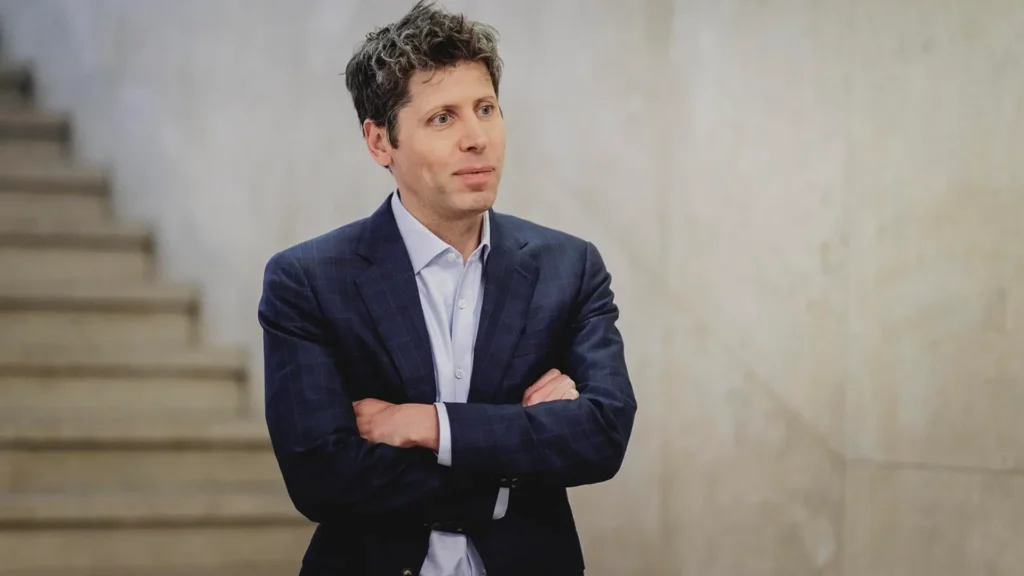
Sam Altman has reportedly sounded a ‘code red’ inside OpenAI, signalling rising competition as the global race toward advanced AI and AGI accelerates.
 Tumisang Bogwasi Tumisang Bogwasi
OpenAI CEO Sam Altman has reportedly issued a “code red” internal warning, signalling heightened urgency within the company amid dramatically escalating competitive pressure in the AI industry. According to new reporting and commentary, major breakthroughs from rivals (and the rapid rise of open‑source AI) have forced OpenAI to accelerate its product roadmap, rethink strategic priorities, and reinforce its long-term leadership position.
The message is clear: the race for leadership in artificial general intelligence (AGI) is entering a new, more aggressive phase.
For years, OpenAI held a clear lead with its GPT series, especially GPT‑4, which set the benchmark for multimodal capabilities and reasoning performance. But the competitive landscape has changed rapidly.
Key competitive pressures include:
Altman’s “code red” warning signals that OpenAI can no longer rely on first‑mover advantage.
One of the most significant strategic concerns is the explosive rise of open‑source AI.
Meta’s Llama family and models from Mistral have enabled:
This threatens OpenAI’s commercial dominance — especially with governments and large corporations seeking sovereignty and model control.
Altman’s internal alert suggests OpenAI will accelerate:
OpenAI is expected to maintain its focus on high‑capability, frontier‑scale systems that competitors cannot easily replicate.
Bloomberg analysts highlight three major themes:
1. The AI War Is Now a Scale War
Compute capacity (not just algorithms) determines which company wins. OpenAI must continue raising billions for compute to match rivals with large internal infrastructure.
2. Market Share Risk Is Rising
Enterprises are increasingly multi‑model, deploying:
This erodes OpenAI’s exclusive hold on the enterprise market.
3. Altman’s Warning Shows the AGI Timeline Is Shortening
Industry insiders believe AGI‑level capabilities may arrive sooner than projected — driving urgency.
To confront the mounting competition, OpenAI is likely to:
The company’s long‑term strategy hinges on staying at the frontier of capability.
OpenAI: Frontier‑scale, safety‑driven, high‑capability models
Google DeepMind: Multimodal excellence and deep research base
Anthropic: Safety‑first, enterprise‑trusted systems
Meta: Open‑source disruptor, global adoption engine
xAI (Elon Musk): Speed‑driven development with large funding commitments
Mistral: Lightweight, high‑performance European challenger
The field has never been more crowded — or more competitive.
Sam Altman’s reported “code red” reflects a pivotal moment: AI development is accelerating at a pace that will reshape industries, governance, and global power.
OpenAI is still a market leader, but the margin is narrowing. The next 12–24 months will determine whether OpenAI can maintain its dominance — or whether the AGI crown shifts to a new competitor.
One thing is certain: the AI race is no longer theoretical. It is real, global, and intensifying.