Newsletter Subscribe
Enter your email address below and subscribe to our newsletter
Enter your email address below and subscribe to our newsletter


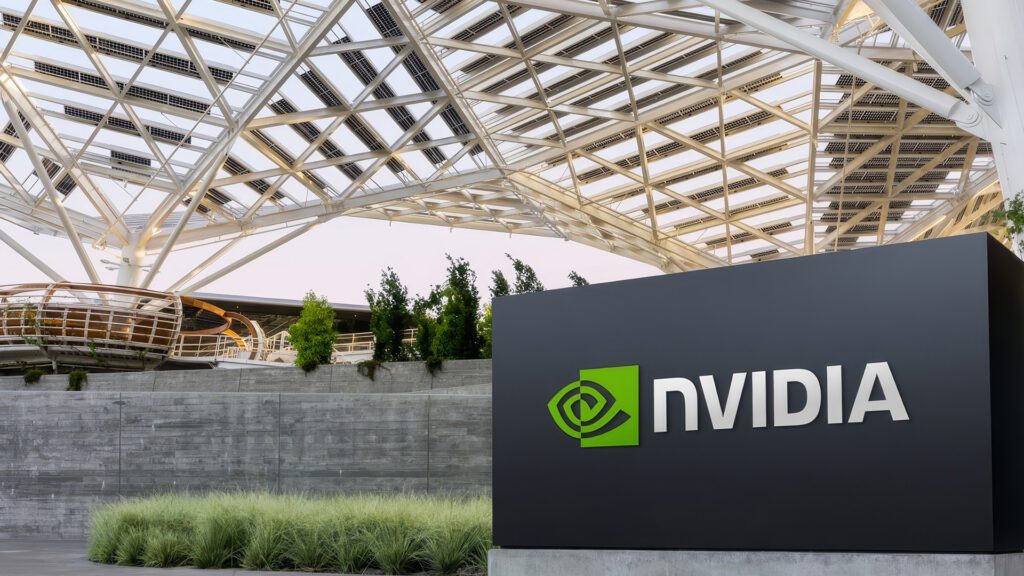
NVIDIA’s U.S. factories to create hundreds of thousands of jobs and power the next industrial revolution in artificial intelligence.
 Tumisang Bogwasi Tumisang Bogwasi
In a historic move aligning with the Trump administration’s push for domestic manufacturing, NVIDIA has announced plans to manufacture its AI supercomputers entirely within the United States for the first time.
Partnering with industry giants like TSMC, Foxconn, and Wistron, the tech giant will launch production of its next-generation Blackwell AI chips in Arizona and build AI supercomputing facilities in Texas. The initiative marks a significant milestone in U.S. technology sovereignty, AI infrastructure development, and economic revitalization.
NVIDIA, the dominant force in AI chip technology, lays the groundwork for a new era of American-made AI infrastructure. The company has commissioned over 1 million square feet of production space with its manufacturing partners.
Blackwell chip fabrication has already begun at TSMC’s facility in Phoenix, while supercomputing plants in Houston (Foxconn) and Dallas (Wistron) are scheduled to come online within 12 to 15 months.
These sites will become hubs for developing AI “gigafactories” — data centers designed exclusively to process artificial intelligence applications. Tens of such factories are expected to power the next industrial revolution in machine learning and automation.
The supply chain for NVIDIA’s AI ecosystem is highly sophisticated. Amkor and SPIL manage Arizona chip packaging and testing operations, while Foxconn and Wistron handle system-level integration. Now anchored in U.S. soil, this multi-tiered supply chain is designed to insulate critical technology infrastructure from geopolitical shocks and international tariffs.
According to Reuters, NVIDIA’s $500 billion investment plan is on par with Apple’s U.S. reshoring pledge and positions it as a linchpin in the AI hardware revolution.
The decision comes amid mounting pressure from the Trump administration, which has signaled steep reciprocal tariffs for technology imports, especially semiconductors. Recent exemptions for smartphones and chip-related tools hint at a strategy to support the AI industry while mitigating inflationary risks.
“The reason they did it is because of the election on November 5, and because of the thing called tariffs,” former President Donald Trump said during a White House briefing.
NVIDIA CEO Jensen Huang emphasized the practical benefits: “Adding American manufacturing helps us better meet the incredible and growing demand for AI chips and supercomputers, strengthens our supply chain, and boosts our resiliency.”

Over the next four years, NVIDIA projects that its U.S. production initiative will support the creation of hundreds of thousands of jobs and deliver up to $500 billion in AI infrastructure value. The move is expected to bolster America’s competitive edge in advanced manufacturing and AI dominance.
NVIDIA Omniverse (for digital twin modeling) and Isaac GR00T robotics (for factory automation) further exemplify the company’s ambition to operate cutting-edge AI-driven smart factories.