Newsletter Subscribe
Enter your email address below and subscribe to our newsletter
Enter your email address below and subscribe to our newsletter


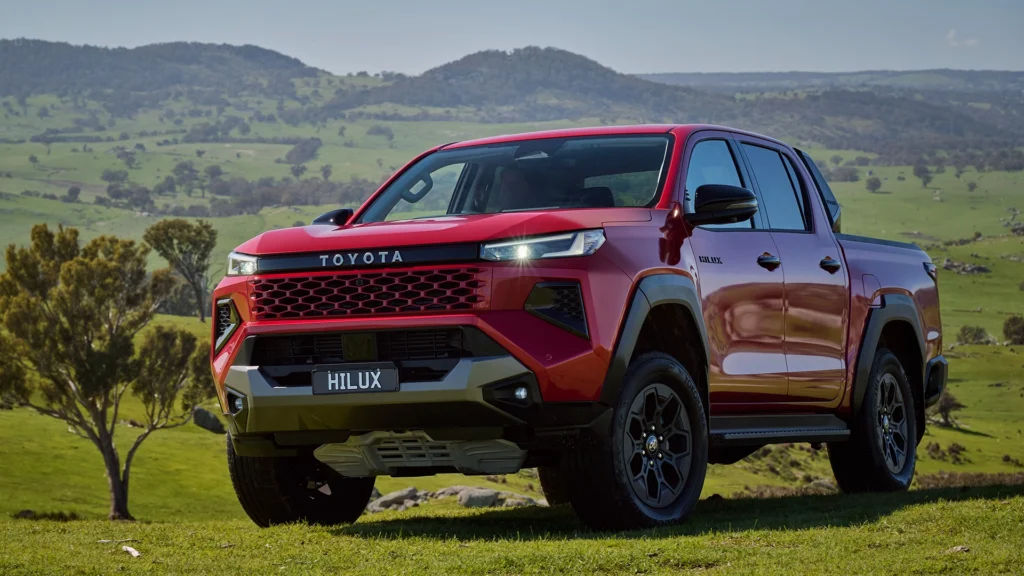
Toyota’s 2026 Hilux targets durability, safety tech, and lower TCO. We break down the industry context, fleet implications, and what to watch next by market.
 Tumisang Bogwasi Tumisang Bogwasi
Toyota has unveiled the all‑new Hilux slated for the 2026 model year, signaling a major update to one of the world’s best‑selling pickups. The reveal emphasizes durability, smarter safety tech, and lower total cost of ownership (TCO) for hard‑use customers—contractors, miners, farmers, government fleets, and adventure buyers. First details and media assets were released via Toyota’s global newsroom and regional press kits, with a public preview video offering early design and capability cues.
Toyota’s preview frames the 2026 Hilux as a ground‑up evolution: tougher underpinnings, improved on‑ and off‑road manners, and broader digital integration for maintenance and driver assistance. For business buyers, that points to fewer shop days, safer miles, and better residuals—the trifecta that drives procurement decisions. Early imagery and regional press materials underscore improvements in chassis tuning, NVH, cabin ergonomics, and payload/towing optimization.
Hilux competes in a white‑hot mid‑size pickup segment led by Ford Ranger, Isuzu D‑Max, and VW Amarok. The market is migrating toward electrified assistance (to save fuel in stop‑start duty) and smarter driver aids (to control insurance costs). Toyota’s strategy—incremental electrification, robust frames, and global parts commonality—has historically produced class‑leading reliability and resale value. Expect the 2026 Hilux to double down on those levers while adding connected fleet tools and ADAS refinements.
Toyota signals multiple engine strategies by region, pairing proven diesel and petrol units with electrification assistance in select markets to reduce fuel burn and improve drivability. Expect stop‑start optimization, energy recuperation, and calibrated torque delivery for towing and low‑speed work. The brief also hints at calibrations tailored to local fuel quality and duty cycles—a key factor for Africa, the Middle East, and ASEAN.

Toyota’s messaging centers on a stiffer ladder‑frame, revised suspension geometry, improved approach/departure angles, and better thermal management for long hot days under load. Cabin packaging appears re‑worked for upright ergonomics, tool‑friendly storage, and larger infotainment with physical controls where it counts. Skid plates, sealed electrics, and dust/water ingress protection remain standard Hilux calling cards.
The 2026 Hilux is expected to expand Toyota Safety Sense (pre‑collision support, lane functions, adaptive cruise in equipped models) and add deeper telematics for fleets: service scheduling, driver behavior insights, geofencing, and over‑the‑air updates where available. That combination tightens compliance, supports coaching, and cuts insurance/maintenance surprises.