Newsletter Subscribe
Enter your email address below and subscribe to our newsletter
Enter your email address below and subscribe to our newsletter


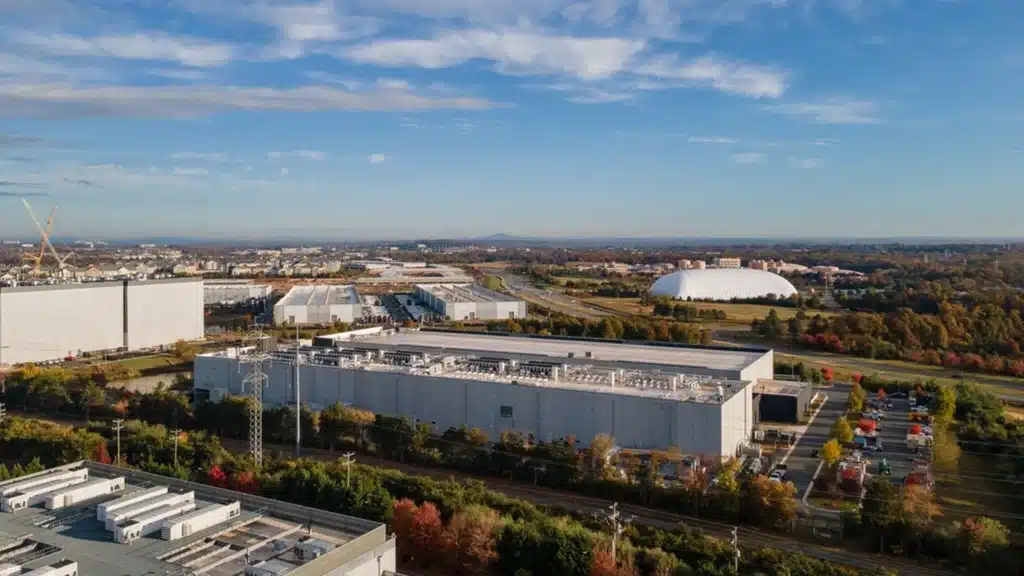
Meta has begun trading electricity to support its rapidly growing AI infrastructure, signaling a new era where Big Tech becomes a direct player in global energy markets.
 Tumisang Bogwasi Tumisang Bogwasi
Meta, the parent company of Facebook, Instagram, and WhatsApp, has entered an unexpected but strategically crucial market: power trading. As artificial intelligence accelerates across the tech sector, energy consumption has become one of the most pressing constraints for companies building large-scale data centers and frontier AI models.
By stepping directly into the power markets, Meta is positioning itself to secure long-term energy supply, reduce exposure to price volatility, and build an AI infrastructure capable of supporting billions of users and next-generation AI agents.
This move signals a larger shift in Silicon Valley: energy security is becoming a foundational pillar of AI strategy.
The AI boom has driven data center power consumption to unprecedented levels. Meta’s next-generation AI models, training clusters, and new data center campuses require:
By entering the power trading market, Meta can:
AI models, especially large-scale multimodal and AGI-level systems, are extraordinarily energy-intensive. A single training run can consume as much electricity as a small town.
Industry reports estimate that:
Meta’s expansion into power markets is not a side project—it is an existential requirement for scaling AI.
Meta is expected to operate through an internal trading desk similar to those used by:
This desk will:
This system effectively turns Meta into a quasi-utility company, a trend experts say will become common across Big Tech.
Meta is not alone. Microsoft, Google, and Amazon are already:
AI is pushing Big Tech firms to behave like national-scale energy buyers.
Meta’s entry will have ripple effects across global energy markets:
Utilities and governments will increasingly rely on Big Tech to help stabilize grids strained by electrification and AI demand.
Energy is now a strategic asset, and governments are observing. Meta’s involvement raises questions about:
Regulators will likely respond with new frameworks to manage the intersection of AI and energy markets.
Meta’s move into power trading is more than a business shift, it is a recognition that future AI capabilities will be limited not by model size, but by electricity.
The companies that control energy will control the AI era.
Meta has just positioned itself as a major player in that future.