Newsletter Subscribe
Enter your email address below and subscribe to our newsletter
Enter your email address below and subscribe to our newsletter


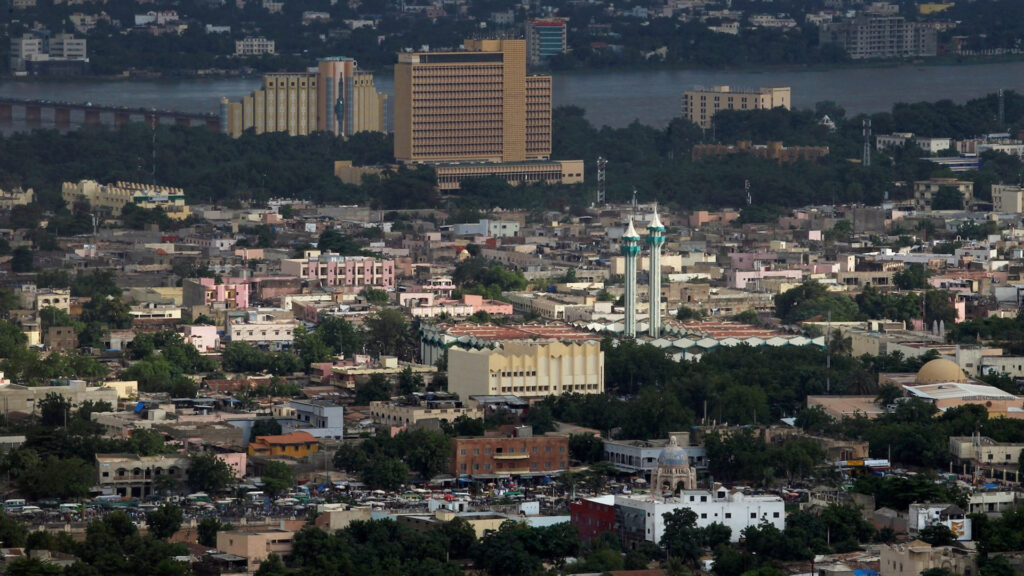
Mali’s government announces a $332 million debt repayment plan to stabilize its economy amidst political and economic challenges.
 Tumisang Bogwasi Tumisang Bogwasi
In a significant step to address its mounting debt, Mali has announced plans to repay 200 billion CFA francs ($332 million) of its internal debt by the end of 2024.
The decision, announced by Mali’s Economy Minister Alousseni Sanou on state television, marks a critical attempt by the junta-led nation to stabilize its economy amidst political instability and economic challenges.
This repayment initiative comes at a time when Mali’s economy is under scrutiny from international financial bodies, including the International Monetary Fund (IMF), which has expressed concerns over the rapid increase in the country’s debt burden.
Mali’s economy has been significantly strained over recent years, compounded by a series of political upheavals, including two coups in 2020 and 2021. The country has faced consequential regional sanctions from organizations like the Economic Community of West African States (ECOWAS) due to its political instability.
Additionally, prolonged conflicts with Islamist militants have disrupted economic activities and diverted resources from essential economic growth projects.
These disruptions have led to a sharp increase in Mali’s debt levels, prompting the government to seek measures that can restore financial stability. The repayment of $332 million is part of Mali’s strategy to ease its internal debt burden, an initiative that may provide some relief to the country’s economy but is unlikely to resolve the underlying issues.
In recent years, Mali’s debt accumulation has drawn attention from the IMF, which has warned about the unsustainable trajectory of the country’s finances. The IMF highlighted in 2021 that Mali’s domestic debt had risen from a modest 8.1% of GDP in 2015 to 22.1% by 2021, a worrying trend that underscores the economic instability Mali is facing.
The IMF’s cautionary statements serve as a reminder of the financial challenges that developing nations like Mali face, especially when political instability and economic sanctions restrict access to global financial markets.
Mali’s Economy Minister Alousseni Sanou acknowledged the “increasing challenges we face” and expressed confidence that the debt repayment initiative will ease some of the economic pressures. However, the minister did not disclose the total size of Mali’s internal debt, leaving room for speculation about the country’s full debt profile.

The repayment plan is expected to have a dual impact:
However, with limited access to international markets due to sanctions and an unstable political climate, Mali’s options for economic recovery are constrained. The success of this debt repayment initiative depends on the government’s ability to maintain fiscal discipline while navigating the ongoing political and security challenges.
The announcement of debt repayment offers potential signals for the financial markets, both regionally and internationally.
Mali’s debt repayment initiative highlights a broader issue affecting several African nations. Many countries on the continent face a delicate balancing act in managing their debt levels while addressing urgent social and economic needs.
The recent economic downturn, coupled with challenges such as political instability and armed conflicts, has exacerbated these pressures, underscoring the need for robust financial management.
African countries with significant internal and external debt must adopt policies that promote fiscal discipline while also seeking ways to stimulate economic growth. Mali’s decision to prioritize debt repayment may set a precedent for other nations grappling with similar challenges, provided it leads to sustainable outcomes.
Mali’s announcement to repay $332 million of internal debt is a step toward stabilizing its economy amidst daunting political and economic challenges. While this move may help restore some confidence in Mali’s financial system, it does not address the root causes of the country’s economic distress.
Political stability, regional cooperation, and effective debt management will be essential for Mali’s long-term economic health.
As the government progresses with this debt repayment initiative, international observers and financial institutions will be watching closely. Mali’s efforts to manage its debt could serve as a model for other countries in the region facing similar issues. However, the sustainability of this strategy will depend on how well Mali can maintain fiscal discipline while navigating its unique political landscape.