Newsletter Subscribe
Enter your email address below and subscribe to our newsletter
Enter your email address below and subscribe to our newsletter


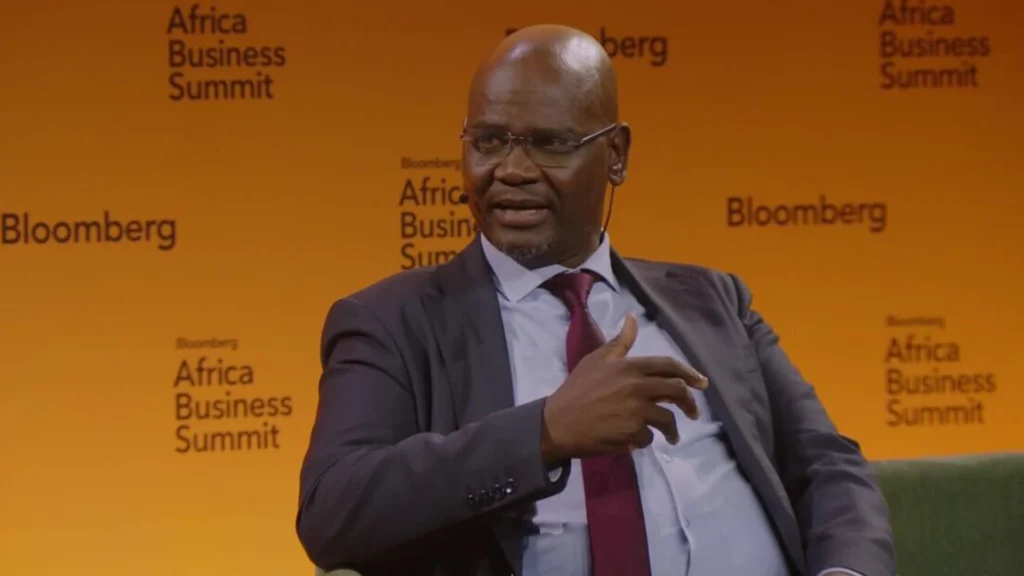
Africa is entering a new era of economic opportunity. Patrick Dlamini explains how strategic capital, infrastructure investment, and governance reforms can unlock the continent’s full potential.
 Tumisang Bogwasi Tumisang Bogwasi
Africa is entering a new phase of opportunity: one defined by innovation, demographic strength, rising urbanization, and strategic economic reforms. In a recent discussion, Patrick Dlamini, CEO of the Development Bank of Southern Africa (DBSA), outlined a bold and compelling vision for how investors, policymakers, and development finance institutions can unlock Africa’s next chapter of growth.
For global business leaders, his message is clear: Africa is not an aid-dependent region; it is the world’s next major investment frontier. But to seize this moment, capital must be deployed strategically and sustainably, in partnership with African institutions that understand the continent’s realities.
Highlights
Africa will account for one-third of the world’s population by 2050, creating the largest labour force and consumer market on the planet. This demographic dividend is central to Dlamini’s thesis: with the right investment in education, infrastructure, and technology, Africa can become a global engine of productivity.
Countries such as Nigeria, Ethiopia, Kenya, Rwanda, Morocco, and South Africa are positioned to lead this demographic-driven growth.
Dlamini stresses that Africa’s infrastructure gap (estimated at $130–170 billion annually) is both a challenge and a massive investment opportunity.
Priority areas include:
DFIs like the DBSA play a catalytic role in de‑risking these investments and mobilising global capital.
Africa holds some of the world’s richest renewable energy potential: solar, wind, geothermal, and hydro. Dlamini envisions Africa not as a passive recipient of climate finance, but as a global green‑energy powerhouse.
Investments in:
Patrick Dlamini highlights the role of DFIs in unlocking private-sector participation. Through blended finance, guarantees, and co‑investment models, African DFIs can reduce perceived risks and create conditions for large‑scale investment.
Key sectors drawing investor interest:
Governance improvements across African economies are often overlooked, but Dlamini underscores their significance. Countries that strengthen transparency, reduce regulatory barriers, and improve project preparation capacity attract more durable capital.
Examples include:
These environments create investor-friendly ecosystems built for long‑term growth.
Three forces make Africa essential to global investment strategy:
Investing in Africa is not charity, it is smart economic positioning.
Patrick Dlamini’s message is ultimately one of optimism anchored. Africa has challenges (energy shortages, infrastructure deficits, governance risks), but it also has unmatched potential.
With coordinated investment, stronger DFIs, and deeper global partnerships, Africa can redefine its role in the world economy. The next decade will determine whether Africa becomes a global growth engine or misses a historic opportunity.
For investors with long‑term vision, the time to act is now.