Newsletter Subscribe
Enter your email address below and subscribe to our newsletter
Enter your email address below and subscribe to our newsletter


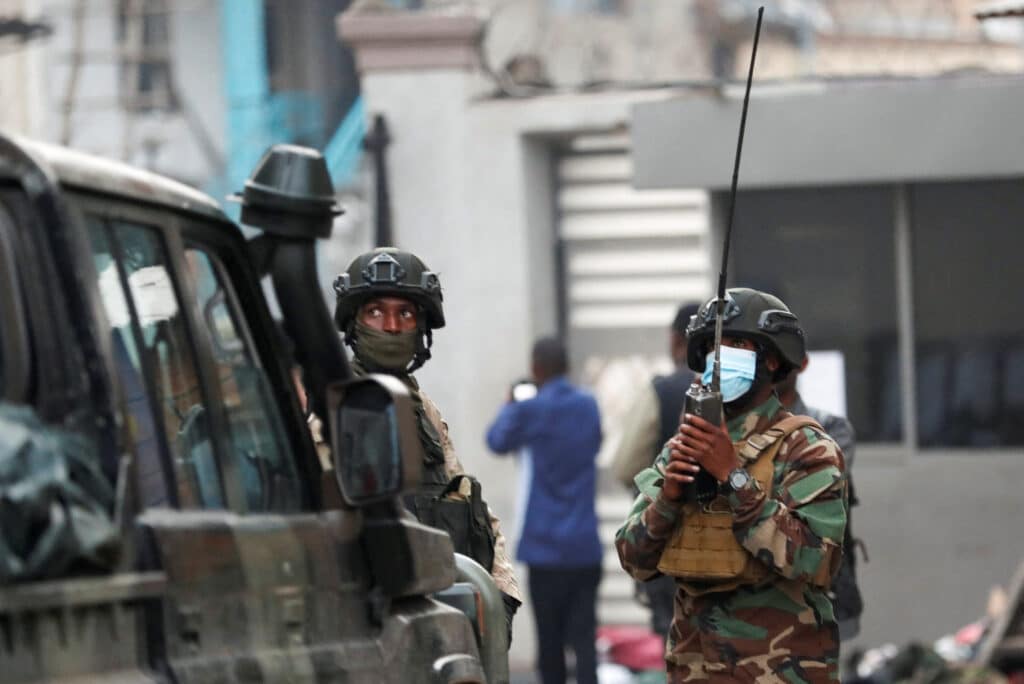
Can the DRC find lasting peace? Discover the historical roots, economic interests, and proposed solutions to end the ongoing crisis in the Great Lakes region.
 Tumisang Bogwasi Tumisang Bogwasi
The Democratic Republic of Congo (DRC) is once again at the epicenter of conflict, with the M23 (March 23 Movement) taking control of key territories such as Goma.
The African Union (AU) Security Council has called for an immediate withdrawal of the rebels, while regional leaders from Uganda, Rwanda, and Kenya convene to address the crisis. The situation has escalated to the point where embassies have been attacked, including the burning of the Ugandan flag, reflecting deep-seated tensions.
In a compelling discussion on The Hard Questions Show, Solomon Serwanja interviews Andrew M. Mwenda, CEO of The Independent and a seasoned observer of East African affairs. Their conversation sheds light on the historical roots of the conflict, the players involved, and potential pathways to resolution.
This article explores the key takeaways from their discussion and the broader implications for regional stability and business investments in the DRC.
The current turmoil in eastern DRC can be traced back to the colonial era when European powers arbitrarily divided African territories at the 1884 Berlin Conference.
Rwanda, a much larger kingdom at the time, saw parts of its territory incorporated into modern-day DRC, Uganda, and Tanzania. This artificial partition left communities such as the Banyamulenge and Banyarwanda in the DRC, where they have faced persistent discrimination and exclusion from Congolese nationality.
The M23 rebellion, named after the March 23, 2009, peace agreement that was never fully implemented, claims to be fighting for the rights of the Banyarwanda community in eastern DRC. The Congolese government, however, views them as a foreign-backed insurgency. Over the years, peace agreements have been signed, but their repeated violations have fueled cycles of violence.
The DRC is home to some of the world’s most valuable mineral resources, including cobalt, coltan, and gold.
Ignoring or attempting to defeat M23 militarily has proven ineffective. A genuine peace process must involve all parties, including rebel groups, to address underlying grievances.
East African leaders, including Uganda’s President Yoweri Museveni and Rwanda’s President Paul Kagame, have a critical role in stabilizing the region.
For long-term peace, the Congolese government must commit to dismantling the FDLR.
The DRC’s conflict is not just a humanitarian crisis; it is a strategic and economic battleground with global implications. The ongoing instability fuels the illicit trade of conflict minerals, enriching armed groups while depriving the country of economic stability.
Geopolitical interests from major powers such as China and the United States continue to shape the conflict dynamics, often prioritizing resource control over lasting peace. Resolving this crisis requires a multipronged approach that includes diplomatic engagement, economic reforms, and regional cooperation to break the cycle of violence once and for all.
Watch the Full Interview:
DRC Conflict: Who’s to Blame and What’s the Solution? – Andrew M. Mwenda on The Hard Questions Show