Newsletter Subscribe
Enter your email address below and subscribe to our newsletter
Enter your email address below and subscribe to our newsletter


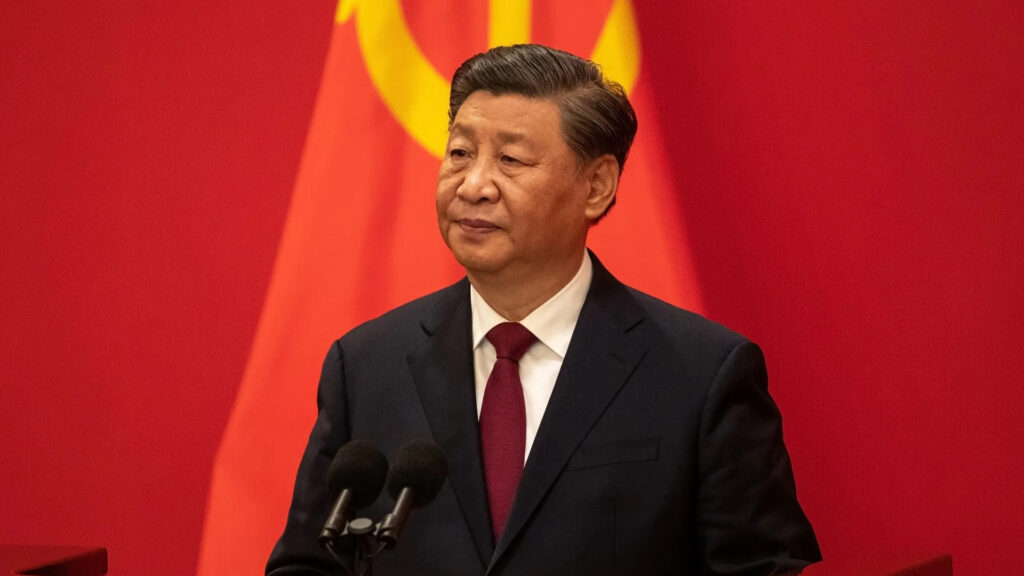
U.S.-China trade war escalates to historic levels as Beijing formalizes its countermeasures and reorients its diplomacy toward multilateral partners.
 Tumisang Bogwasi Tumisang Bogwasi
In a bold, retaliatory move, Beijing has escalated its trade confrontation with Washington by imposing a 125% tariff on U.S. goods, matching President Donald Trump’s recent tariff hikes.
In an official announcement by the State Council Tariff Commission (No. 6 of 2025), the Chinese government formalized the tariff hike as a direct response to the United States’ “unilateral bullying and coercion.” China’s Finance Ministry reinforced this position, dismissing Washington’s policy as economically irrational and politically motivated.
This sharp escalation intensifies an already fraying global trade landscape, with analysts warning that bilateral trade between the world’s two largest economies is now in economic severance.
According to the announcement released by the State Council Tariff Commission (Tax Commission Announcement No. 6 of 2025), China cited its Tariff Law, Customs Law, and Foreign Trade Law to justify the tariff adjustment:
“Given that at the current tariff level, there is no market acceptance for U.S. goods exported to China. If the U.S. continues to impose tariffs on Chinese goods exported to the U.S., China will ignore it.”
The policy, approved by the State Council, aims to demonstrate China’s legal and administrative basis for its countermeasures while strategically halting its participation in further tariff escalations.
According to the Peterson Institute for International Economics, average U.S. tariffs on Chinese exports are now a staggering 145%, over 40 times higher than pre-2018 levels. China’s corresponding tariffs cover virtually all U.S. imports, rendering two-way trade economically unviable.
UBS analysts view this as a signal of total economic disengagement: “China’s declaration that it would not retaliate in kind is an acknowledgement that trade between the two countries has essentially been completely severed.”
Though Beijing is halting tit-for-tat tariff measures, it has widened its response to non-tariff retaliation:
President Xi Jinping has intensified diplomatic outreach. In a recent meeting with Spanish Prime Minister Pedro Sanchez, Xi emphasized the importance of countering “unilateral bullying” and strengthening multilateral cooperation.
Key diplomatic and trade engagements include:
China’s strategy is to build a trade and diplomatic ecosystem independent of U.S. influence. While Washington doubles down on tariff-based deterrence, Beijing is reorienting toward regional integration and South-South cooperation.
Eric Olander, of the China-Global South Project, noted:
“China’s best offer to Southeast Asia is stability. Don’t underestimate how important that is at a time like this.”
For China, multilateralism and predictable economic partnerships are emerging as a cornerstone of global influence.
With Beijing’s announcement now enshrined in law and Washington showing no signs of pulling back, the decoupling of U.S.-China trade appears to be entering its final stages. While this may reduce dependency, it also introduces volatility and realignment for the global trade order.
Both nations are staking their future economic prosperity on strategic alliances, regional partnerships, and ideological resilience. Whether this strategy succeeds or backfires will shape the 21st-century world economy.