Newsletter Subscribe
Enter your email address below and subscribe to our newsletter
Enter your email address below and subscribe to our newsletter


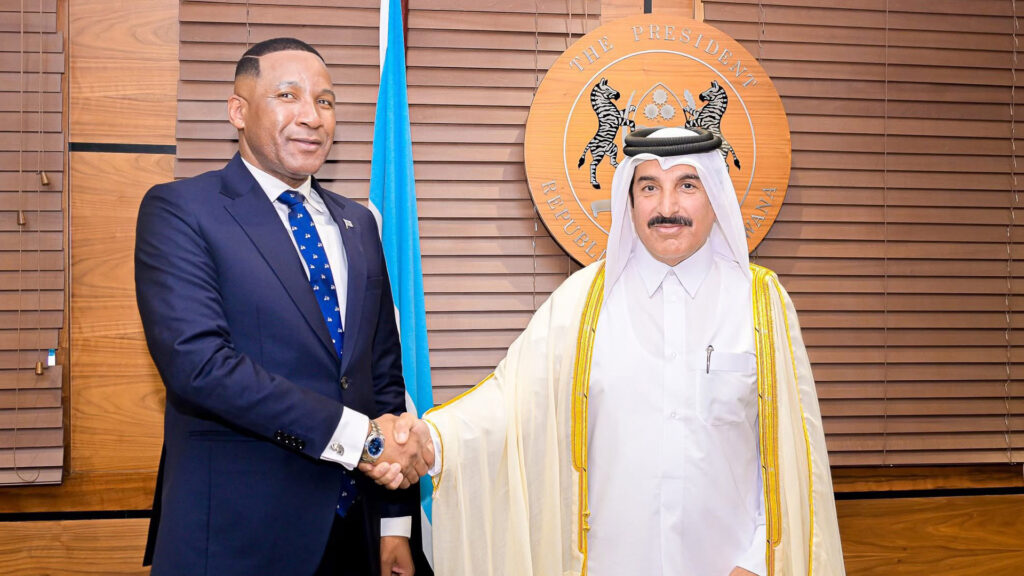
Botswana has secured one of the largest Gulf investments in Southern Africa’s history — a $12 billion partnership with Qatar’s Al Mansour Holdings.
 Tumisang Bogwasi Tumisang Bogwasi
Gaborone – In a landmark move that underscores Botswana’s growing role in the global investment arena, President Duma Gideon Boko announced a $12 billion investment agreement with Qatar’s Al Mansour Holdings. The deal, signed in Gaborone on August 21, 2025, positions Botswana as a pivotal destination for Middle Eastern capital seeking long-term growth opportunities in Africa.
The partnership spans multiple sectors, including infrastructure, energy, tourism, mining, agriculture, cybersecurity, and defense, a comprehensive package aimed at catalyzing economic transformation while reinforcing Botswana’s reputation as a stable and business-friendly nation.
This deal comes amid a wave of Gulf investments targeting African economies. Qatar and its Gulf neighbors, flush with energy revenues, are increasingly diversifying into emerging markets. Botswana, with its record of political stability and prudent fiscal management, is seen as a low-risk gateway into Southern Africa.

According to the African Development Bank, Africa requires an estimated $130–$170 billion annually in infrastructure investment. Partnerships like this one help bridge that gap while aligning Gulf sovereign wealth strategies with African growth ambitions.
The World Bank has highlighted that infrastructure development, particularly in energy and transport, is essential to unlocking Sub-Saharan Africa’s economic potential. This aligns directly with Botswana’s long-term development agenda.
President Boko reinforced the announcement on his official Facebook page, stating:
“This is just the beginning. I am proud to announce a landmark partnership between Al Mansour Holdings and the Botswana Development Corporation, with Al Mansour Holdings committing $12 billion (approximately 162 billion PULA) in investments to accelerate our national development goals. This transformative partnership spans infrastructure, energy, mining, the diamond industry, agriculture, tourism, cybersecurity, and defense, driving economic stability, diversification, and long-term prosperity. Together, we are building a Botswana that is globally competitive, secure, and prepared for the future.”

During the high-level engagement with accounting officers, Boko emphasized that this deal would help address both immediate economic challenges and longer-term strategic gaps. “This historic move will be enough to address immediate challenges facing the country while laying the foundation for future resilience,” he said.
For Botswana, the $12 billion deal is transformative:
Economists project this deal could add 2–3% to Botswana’s annual GDP growth over the next five years (IMF).
Experts note that Gulf states are seeking both political influence and financial returns in Africa. As Reuters reports, Qatar’s Al Mansour Holdings is among a growing number of firms viewing Africa as a frontier for high-yield opportunities. Botswana’s transparency and low corruption index ranking set it apart from peers, giving it a competitive edge in attracting such capital.
The Transparency International Index consistently ranks Botswana among the least corrupt nations in Africa, reinforcing investor confidence. Meanwhile, think tanks such as the Brookings Institution stress that Africa’s rising middle class and urbanization make it one of the most attractive destinations for long-term capital.
The agreement also carries geopolitical undertones. Qatar is actively expanding its influence in Africa, counterbalancing Saudi and Emirati investments in the continent. For Botswana, aligning with Doha allows it to hedge its partnerships and diversify its international alliances.
In his remarks, President Boko highlighted the importance of balancing economic ambition with national sovereignty:
“Our partnerships must empower Botswana without eroding our independence. This deal represents investment with respect, not conditionality.”
As Africa’s economic gravity shifts toward high-growth sectors such as technology, infrastructure, and green energy, Botswana is now better positioned to influence regional trade and investment trends (Brookings Institution).

Implementation details are expected to unfold over the coming months, with initial projects focused on energy and infrastructure. A joint Botswana-Qatar investment council will oversee execution and ensure local job creation targets are met.
For business leaders, this deal is a clear signal that Botswana is stepping up as a serious contender in the African investment landscape, combining political stability, strategic partnerships, and untapped economic potential.