Newsletter Subscribe
Enter your email address below and subscribe to our newsletter
Enter your email address below and subscribe to our newsletter


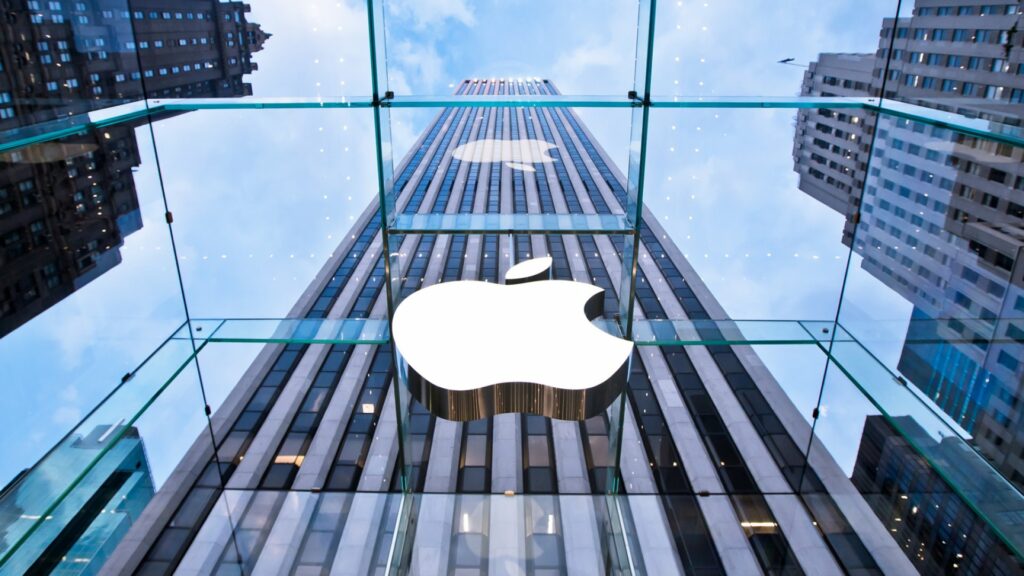
Apple joins national reshoring wave with $500B push to advance U.S. tech, AI, and innovation capacity by 2029.
 Tumisang Bogwasi Tumisang Bogwasi
In a groundbreaking move, Apple Inc. has unveiled its plans to invest $500 billion in the United States over the next four years. This sweeping initiative is expected to reshape the future of American technology, manufacturing, and research while aligning with national efforts to bolster domestic production and reduce dependency on overseas supply chains.
The plan includes the establishment of a major server factory in Houston, Texas, the hiring of 20,000 new research and development employees, and a range of educational and infrastructure investments across the U.S.
At the heart of Apple’s investment strategy is its new server manufacturing plant in Houston, which will build next-gen servers to support Apple Intelligence, the company’s AI product suite. This project underscores Apple’s push to bring AI infrastructure development to U.S. soil, with ground-breaking scheduled for later this year and completion expected in 2026.
Apple will partner with Foxconn to construct the facility, which complements its existing work with suppliers like Broadcom, Corning, Skyworks Solutions, and Qorvo—all of whom contribute key components to Apple’s global products from within the U.S.

Apple also announced a multibillion-dollar commitment to Taiwan Semiconductor Manufacturing Company (TSMC) for advanced silicon production at its Fab 21 facility in Arizona. Apple is TSMC’s largest customer, and this investment aligns closely with the goals of the CHIPS Act, a key initiative passed to support U.S. semiconductor manufacturing.
To build a skilled workforce, Apple will launch a new Apple Manufacturing Academy in Detroit, where Apple engineers and faculty from Michigan State University and other institutions will train small- and medium-sized manufacturers in AI-driven smart manufacturing techniques.
This program reflects Apple’s intent to foster innovation across America’s industrial base—not only by investing capital, but also by empowering next-generation engineers and manufacturers.
Apple will hire 20,000 employees in research and development, focusing on AI, silicon engineering, and advanced manufacturing. While Apple did not specify how many of these positions will be based in the U.S., the company emphasized that the hires are part of a broader push to grow its American footprint.

This announcement comes after reports that Apple CEO Tim Cook met with President Donald Trump, whose administration recently reimposed 10% tariffs on several electronics products made in China. Apple’s commitment is seen by analysts as a political and economic hedge against tariff risk.
“This pledge represents a political gesture towards the Trump administration,” said Gil Luria, an analyst at D.A. Davidson. He estimated Apple was already spending over $150 billion annually in the U.S.
Trump responded on Truth Social, thanking Apple and calling the announcement proof of confidence in his administration’s vision for American innovation.

Apple’s announcement is part of a broader onshoring wave sweeping across the U.S.:
The momentum reflects both market opportunity and a national policy agenda designed to strengthen economic resilience, innovation, and jobs.
Apple’s $500 billion investment is more than a capital commitment—it’s a strategic declaration. By doubling down on domestic production, AI infrastructure, and workforce development, Apple is helping to redefine America’s role in the global tech economy.
As Tim Cook stated: “We are bullish on the future of American innovation… and we’re proud to build on our long-standing U.S. investments with this $500 billion commitment to our country’s future.”