Enter your email address below and subscribe to our newsletter

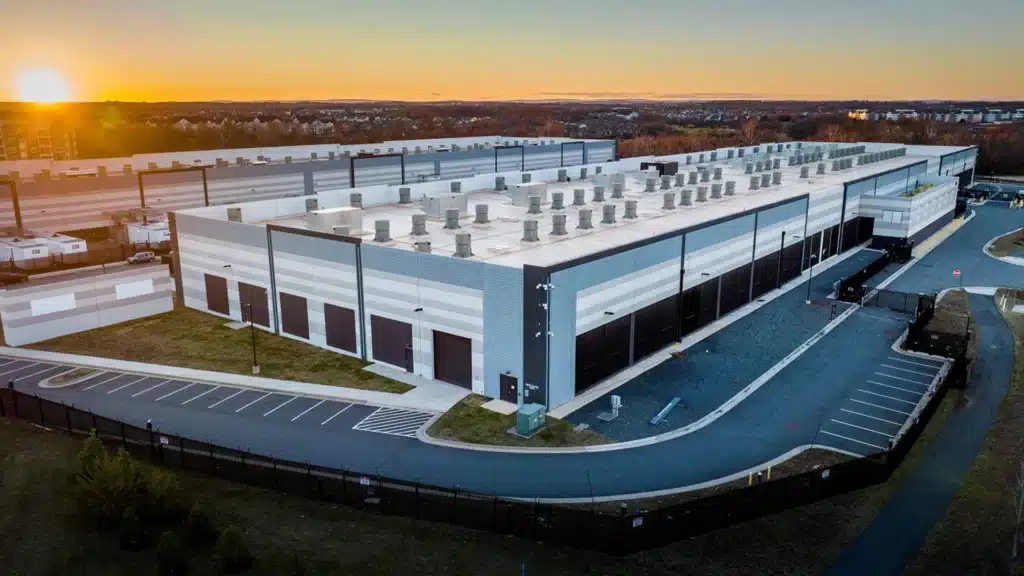
Aerial view of a large amazon data center complex at sunset showing long warehouse style buildings with rooftop cooling units surrounding roads and security fencing

Amazon Operates 900 Data Centers as It Tries to Meet AI Demand

With over 900 data centers and rising AI demand, Amazon is building the world’s largest compute infrastructure.

Written By: author avatar Tumisang Bogwasi
author avatar Tumisang Bogwasi
Tumisang Bogwasi, Founder & CEO of Brimco. 2X Award-Winning Entrepreneur. It all started with a popsicle stand.

Share your love

Amazon Web Services (AWS) (already the world’s largest cloud provider) is racing to keep up with the explosive growth of artificial intelligence. With over 900 data centers globally, Amazon is aggressively expanding capacity, redesigning infrastructure, and innovating in chips, cooling, and energy procurement to ensure it can meet the unprecedented demand for AI compute.

This surge isn’t just about more servers. It’s about a fundamental shift in how global cloud infrastructure is built. AI is transforming data centers into power-hungry, GPU-intensive, hyperscale ecosystems. Amazon’s strategy offers a revealing look into how Big Tech is preparing for a future where compute is a geopolitical asset, and energy is the new currency.

Highlights

  • Amazon now operates over 900 data centers worldwide, the largest footprint in the cloud industry.
  • AI growth is driving massive new infrastructure investment across AWS regions.
  • The company is developing next-gen chips (Trainium, Inferentia) to reduce GPU dependency.
  • Energy demand is skyrocketing; AWS is investing heavily in renewables and long-term power contracts.
  • Amazon’s scale signals a global shift: AI innovation is now constrained by compute and energy, not ambition.

The AI Boom Is Redefining Data Centers

AI has transformed data centers from storage hubs to high-intensity compute platforms. Training and running frontier models requires:

  • dense GPU clusters,
  • high-bandwidth fiber networks,
  • liquid cooling systems,
  • and massive amounts of electricity.

This demand has pushed AWS to expand rapidly across North America, Europe, Asia, and Africa.

Amazon’s 900-Strong Data Center Footprint

Amazon’s expansion includes:

  • new hyperscale regions in the US, Asia-Pacific, and the Middle East,
  • edge locations for low-latency AI applications,
  • specialized AI training clusters,
  • modular data centers for faster deployment.

This global network is becoming the backbone of enterprise AI adoption.

World map illustrating amazon web services global infrastructure with colored markers indicating aws regions availability zones and data center locations across north america europe asia pacific south america africa and the middle east
A global view of Amazon Web Services expanding infrastructure highlighting the worldwide distribution of AWS regions and data centers that power cloud computing at scale

AWS Is Fighting GPU Scarcity With Its Own Chips

One of Amazon’s most strategic moves has been designing its own silicon.

AWS Chips:

  • Trainium → optimized for AI training
  • Inferentia → optimized for inference
  • Graviton → performance-per-watt leader for cloud workloads

These chips reduce dependency on Nvidia, lower costs, and improve energy efficiency.

Close up of an amazon designed semiconductor chip mounted on a circuit board showing the exposed processor die and surrounding electronic components
A detailed view of Amazons in house chip design purpose built to power high performance workloads across AWS data centers

The Energy Challenge: AI Runs on Electricity

Amazon’s 900 data centers require enormous power. AWS has:

  • signed multi-gigawatt renewable contracts,
  • invested in wind & solar farms,
  • deployed battery storage solutions,
  • explored hydrogen and small modular reactors (SMRs).

Without a diversified energy strategy, AI expansion would stall.

Geopolitics: Compute as National Infrastructure

AI is now part of national economic competitiveness. AWS infrastructure supports:

  • government cloud platforms,
  • defense analytics,
  • financial system resilience,
  • healthcare and scientific research.

The US, EU, India, and Middle Eastern governments increasingly see cloud infrastructure as strategic national assets.

Business Implications: The New Cloud Power Hierarchy

Amazon’s scale creates clear winners:

  • enterprises adopting AI quickly via AWS tools,
  • countries hosting new AWS regions,
  • developers using Trainium & Inferentia for cheaper compute.

But it also exposes risks:

  • concentrated power in hyperscalers,
  • energy grid dependency,
  • rising cloud costs for businesses.

Outlook: Amazon Is Building the AI Backbone of the Global Economy

The message is clear: Amazon understands that the future of AI will be bottlenecked by compute and energy, not algorithms.

By operating 900 data centers and expanding aggressively, AWS is fortifying its position as the world’s most essential digital utility.

The next decade of AI innovation will be shaped by companies that can provide scalable, affordable, and energy-secure compute at a global scale.

Right now, Amazon is leading that race.

Tumisang Bogwasi
Tumisang Bogwasi

Tumisang Bogwasi, Founder & CEO of Brimco. 2X Award-Winning Entrepreneur. It all started with a popsicle stand.