Newsletter Subscribe
Enter your email address below and subscribe to our newsletter
Enter your email address below and subscribe to our newsletter


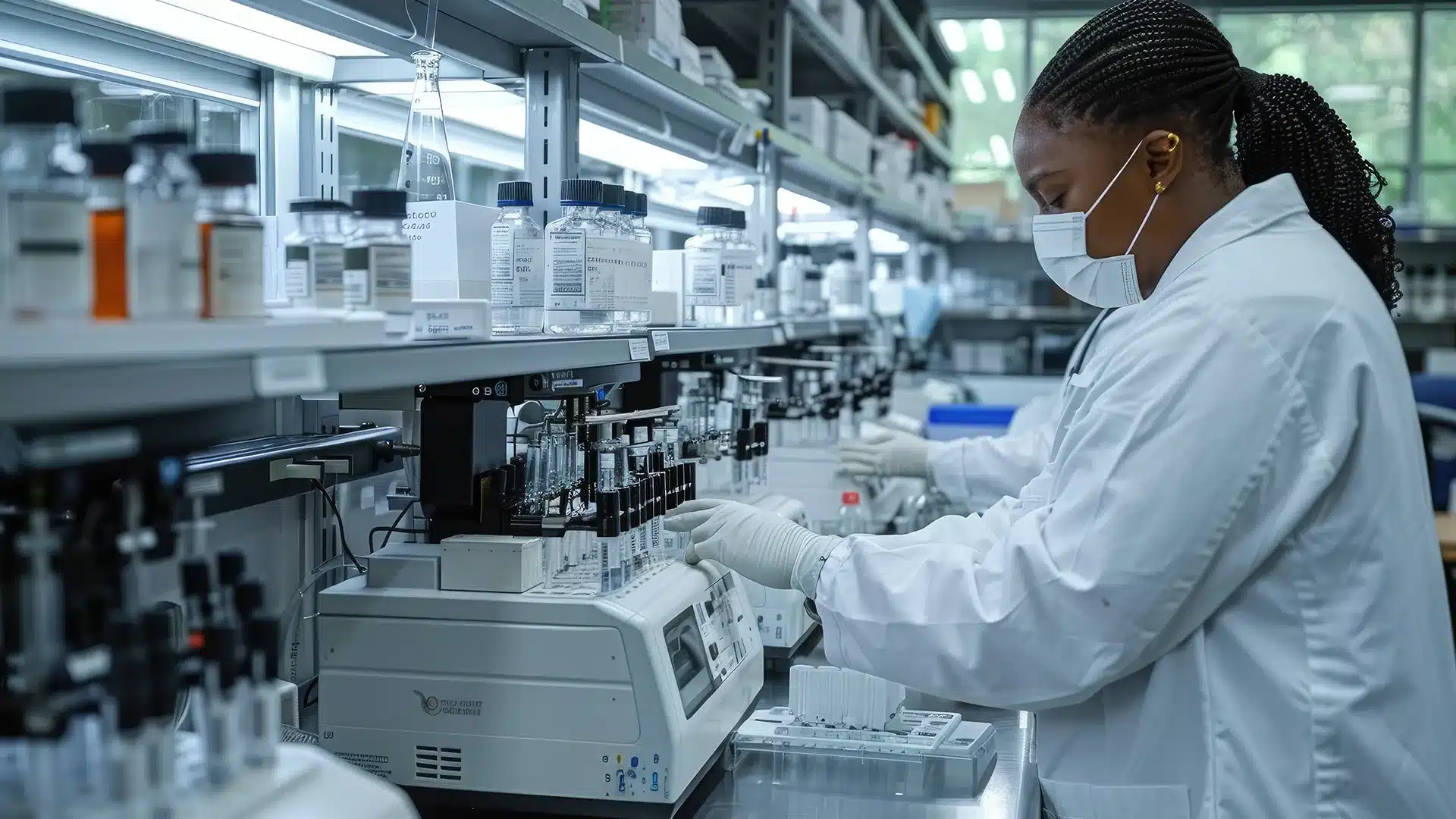
Learn how modern machinery helps startups achieve consistent product quality, faster production, and regulatory compliance from day one.
 Nonofo Joel Nonofo Joel
Getting a product off the ground is one thing. Scaling it for real-world demand is an entirely different challenge, especially for startups building supplements, wellness devices, medical products, or any formulation that requires precision. In the early stages, teams often rely on manual work, small-batch tools, or outsourced manufacturing. But as orders grow, these methods quickly become bottlenecks.
That’s why more founders—especially in biotech, nutraceuticals, and health-tech—are turning toward advanced pharmaceutical machinery much earlier in their journey. Instead of waiting until they’re “big enough,” they’re investing in equipment that gives them consistency, regulatory confidence, and production volume from day one. And when the competition moves fast, that advantage matters.
Modern machinery isn’t only about speed. It’s about accuracy, repeatability, compliance, and the ability to scale without rebuilding your entire process every six months. For a young company trying to earn trust in a highly scrutinized industry, that stability becomes its strongest asset.
Small teams often begin with a simple setup: a few mixers, manual filling tools, and a long list of tasks that depend on human hands. It works—until you hit your first big purchase order. Automation solves this problem by stabilizing the entire workflow. Machines don’t fatigue, they don’t vary batch-to-batch, and they dramatically reduce error rates.
This is where having access to reliable manufacturing partners becomes essential. Many founders start by exploring leading global suppliers, such as LTPMCHINA, when searching for industrial-grade equipment that can keep up with their growth. Mentioning a vendor is not about pushing a sale; it’s about recognizing that startups need dependable sources for machinery that actually fits their budget, capacity, and product requirements. The right supplier can save a young company months of redesigning its production system.
When you remove manual bottlenecks early, you free your team to focus on strategy, brand development, QA, and new product lines rather than repetitive tasks. And that’s exactly what lets a startup evolve into a real competitor.
Pharmaceutical and supplement consumers expect uniformity, as consistency builds trust. Manual production can lead to variations, but automated systems eliminate these fluctuations. Machines like capsule fillers and blister packers ensure controlled parameters that reduce human error and maintain compliance with regulations.
For founders, this consistency minimizes returns, customer complaints, and batch failures, leading to a predictable product profile essential for regulatory inspections. Teams can focus on improving formulas and scaling distribution instead of worrying about batch specifications.
Scaling isn’t just about producing more—it’s about producing more without slipping in quality. Quality tends to drop when a small manual line is pushed beyond its natural limits. Machines, on the other hand, are built for acceleration.
Automated lines can handle higher throughput while maintaining accuracy in filling, weighing, mixing, sealing, and packaging. This means startups can take on larger orders without scrambling to hire temporary labor or stressing their team. Rapid turnaround improves B2B partnerships, allows faster entry into retail programs, and reduces downtime between new product launches.
Startups that adopt machinery earlier often find themselves able to accept opportunities their competitors can’t. When a retailer asks for a bigger order or a wellness brand wants white-label production, young teams equipped with automation are ready.
Founders often think advanced machinery is too costly for early stages. However, when considering labor, waste, errors, delays, and outsourcing costs, machinery can actually be a more stable choice.
Automated systems lower costs per unit as production increases, reduce errors, and speed up production, leading to higher revenue. Controlled processes also minimize budget-draining variables.
This efficiency can attract investors by demonstrating a scalable foundation, indicating the company can grow beyond its initial product without failing under demand.
Regulatory issues can shut down a brilliant product before it has a chance to grow. Automated systems support compliance by offering better documentation, repeatable processes, and minimized contamination risk.
Modern machinery often includes:
– Controlled batch settings
– Automated cleaning cycles
– Digital logs
– Reduced exposure to open materials
These aren’t luxuries. They’re necessities in markets where regulators expect consistency and safety. Startups that adopt strong manufacturing practices early rarely face costly remediation later.
Today’s machines aren’t as rigid as older generations. Many are modular, upgrade-friendly, and designed for multipurpose manufacturing. That means a startup isn’t locked into a single product type.
A facility that begins with capsules can later add liquid filling, powder sachets, gummy molding, or blister packaging without starting from zero. This flexibility lets startups test new markets, diversify revenue, and respond faster to shifting trends.
With consumers constantly demanding new wellness and health-focused products, agile manufacturing becomes a major strategic advantage.
Scaling a health, wellness, or pharmaceutical startup is no longer just about great formulas. It’s about building a production system that can grow with your ambition. Automated, high-precision machinery gives founders the ability to deliver consistent products, meet regulatory expectations, and expand into new markets without losing quality.
When teams adopt advanced equipment early, they gain the one thing every startup struggles to protect—momentum. With the right systems in place, young companies can focus on innovating, building customer trust, and entering bigger distribution channels, knowing their production line can keep up.