Newsletter Subscribe
Enter your email address below and subscribe to our newsletter
Enter your email address below and subscribe to our newsletter


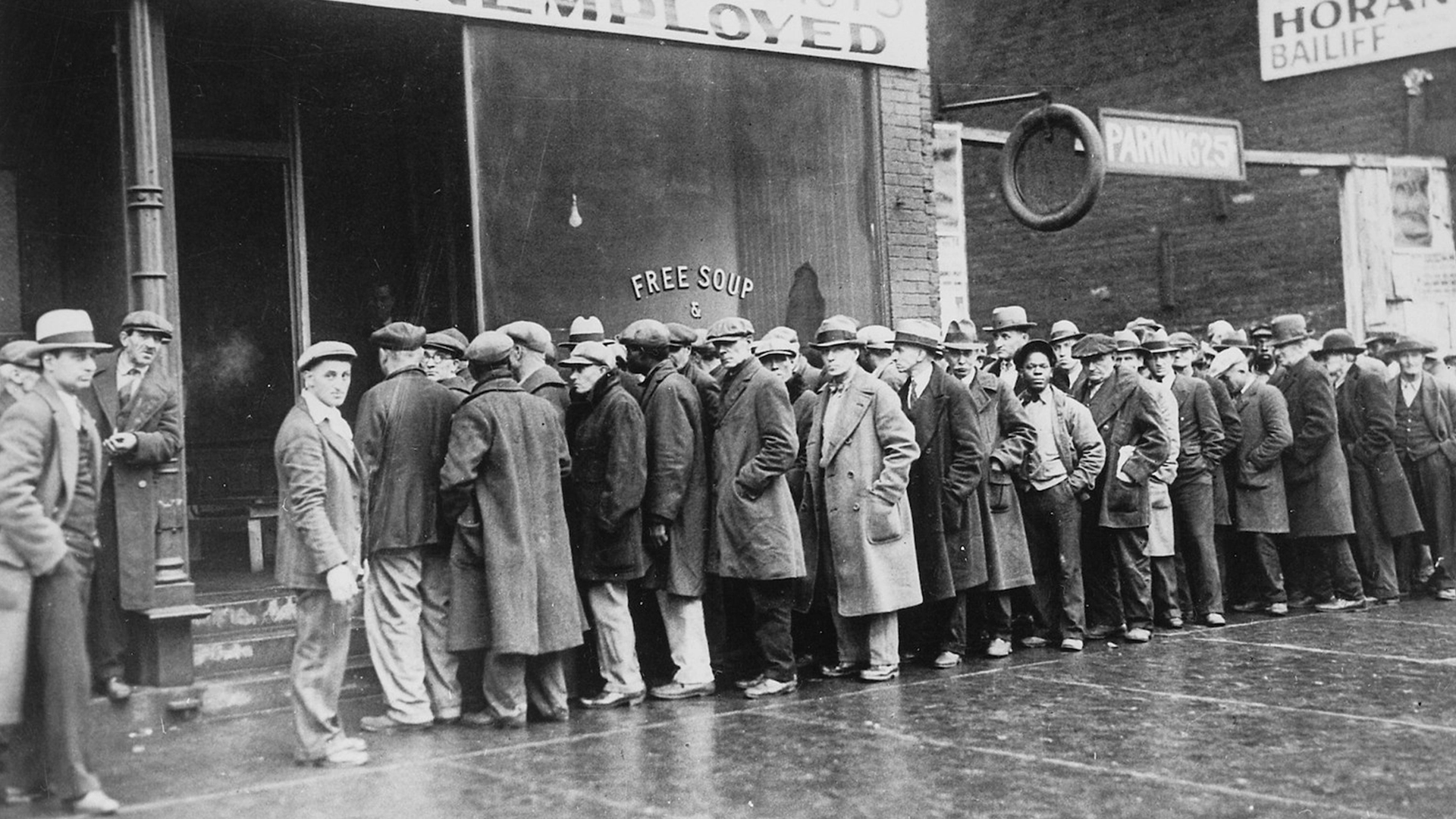
The Great Depression was the worst economic disaster of the 20th century, marked by the 1929 stock market crash, widespread bank failures, and a severe global economic downturn.
 Tumisang Bogwasi Tumisang Bogwasi
| Getting your Trinity Audio player ready... |
Understanding economic history is essential for anyone seeking to navigate today’s complex business landscape. By examining past events, such as the Great Depression, we gain valuable perspective on how economic systems function, what makes them vulnerable, and how policy decisions can shape outcomes for entire societies.
The Great Depression stands out as a defining moment in economic history, a period when the stock market crash of 1929, widespread bank failures, and a sharp economic downturn converged to create the worst economic disaster of the 20th century.
This crisis not only devastated the American economy but also sent shockwaves through global markets, prompting a reevaluation of economic policies and the role of institutions like the Federal Reserve. The lessons learned from this era continue to inform how we approach financial stability, crisis management, and economic growth today.
In this article, we explore the causes, key events, and global impact of the Great Depression, examine the roles of the Federal Reserve and government policies, and discuss the lasting economic and social consequences that shaped modern economic thought and recovery efforts.
A recession is a significant decline in economic activity across the economy lasting more than a few months, typically visible in reduced consumer spending, industrial production, employment, and income levels.
The Great Depression was a severe and prolonged global economic downturn that began in 1929 and lasted through much of the 1930s. It was the longest and deepest downturn in the history of the United States and the modern industrial economy.
The Great Depression marked a pivotal moment in American and global economic history, reshaping financial systems, government policies, and societal norms worldwide. It was not just a period of economic decline but a complex crisis that affected consumer spending, industrial production, and the very fabric of the global economy.

Understanding this event is essential to grasp how economic vulnerabilities can cascade into widespread hardship and how policy responses can influence recovery trajectories.
Originating in the United States with the stock market crash of 1929, the crisis triggered massive unemployment (by 1933, the U.S. unemployment rate had risen to 25%), bank failures, and a dramatic drop in economic output.
This era exposed the fragility of financial institutions, leading to a widespread financial crisis that underscored the interconnectedness of global economies. It also highlighted the critical roles played by the Federal Reserve System, the federal government, and international trade policies in either mitigating or exacerbating economic downturns.
The Great Depression began as a confluence of several factors. The Federal Reserve raised interest rates in 1928 and 1929 to limit speculation in securities markets, which slowed economic activity in the United States.

Key Factors Leading to the Great Depression:
Central banks, especially the Federal Reserve Bank, played a pivotal role during this period. Key aspects of their involvement include:

The structure and regulation of the banking system were central to the unfolding of the Great Depression. In the years leading up to the crisis, banks operated with minimal oversight, allowing risky lending and unchecked speculation in the stock market.
The Federal Reserve, tasked with overseeing the banking system, failed to implement measures that could have curbed these excesses or prevented the wave of bank failures that followed the stock market crash. As panic spread and depositors lost confidence, bank runs became common, further destabilizing the financial system.
In response, the federal government took decisive action: the Federal Deposit Insurance Corporation (FDIC) was established in 1933 to insure deposits and restore public trust. Additionally, the Banking Act of 1933 (commonly known as the Glass-Steagall Act) introduced critical reforms, separating commercial and investment banking to reduce systemic risk.
These regulatory changes helped stabilize the banking system and laid the groundwork for a more resilient financial sector in the decades that followed.

The economic downturn led to a dramatic rise in unemployment, with nearly one-quarter of the labor force out of work at its peak. Unemployment rates soared to 25% in the United States by 1933, with unemployed men in industrial regions particularly affected.
Consumer spending plummeted, industrial production declined sharply, and farming communities faced severe hardships due to falling commodity prices. Agricultural organizations played a crucial role in supporting rural households, providing education on home gardens, poultry raising, and food preservation, and promoting community cooperation and self-sufficiency.

Thousands of local banks closed during the 1930s as panicked depositors withdrew cash, contributing to the financial crisis and deepening the economic downturn. The collapse of local banks underscored the need for federal intervention to maintain monetary stability.
The Great Depression also led to a significant increase in the number of people living in shantytowns, often referred to as ‘Hoovervilles’ in the United States.
The social impacts were profound: birth rates declined significantly, with an average drop of 12% in 14 major countries from 1930 to 1935. Family dynamics changed as many women entered the workforce to support their families.
The business community and business leaders were called upon by President Hoover to help stabilize the economy, with efforts to maintain wages and encourage private sector investment. The private sector remained a key component in job creation and economic activity, and government initiatives aimed to stimulate private enterprise to restore growth.
The federal government, under the Roosevelt administration, responded with relief programs and increased government spending to stimulate economic activity. Agencies such as the Reconstruction Finance Corporation and the Federal Deposit Insurance Corporation were established to support financial institutions and protect depositors.
These efforts marked a significant shift toward greater federal involvement in economic stabilization and social welfare.

The Great Depression spread worldwide, affecting economies across Europe, Asia, and Latin America. International trade fell by more than 50% during the Great Depression, amplifying the crisis.
The commitment to the gold standard by many countries, including the U.S., contributed to the global spread of the Great Depression, as the international gold standard acted as a transmission mechanism, forcing countries to adopt deflationary policies that worsened economic output globally.
Economic historians note that the economic contagion from the U.S. quickly spread to other countries, leading to sharp declines in production and increases in unemployment worldwide. The collapse of global trade, combined with rising protectionism and a lack of international coordination among governments, led to severe economic contractions in many countries.
Political instability followed, with fascist and nationalist movements gaining ground in parts of Europe and Asia. The Great Depression contributed to the rise of fascism in Europe, as militaristic regimes in Germany, Italy, and Japan promised economic relief and national expansion.
The United States’ focus on domestic issues during the Depression led to a retreat from international involvement, contributing to the rise of aggressive regimes in Europe and Asia. This shift had a profound impact on U.S. foreign policy, leading to increased isolationism as the government prioritized domestic economic recovery over international engagement.
During this period, President Herbert Hoover’s early responses in the U.S. were marked by efforts to maintain a balanced budget and limited intervention, while the presidential election approaching in 1932 saw public sentiment shift toward more active government involvement.

The presidential election of 1932, which brought President Roosevelt to power, was a turning point, as Roosevelt implemented decisive actions such as the banking holiday and sweeping financial reforms.

Economic historians highlight that the lack of international coordination and the commitment to the gold standard exacerbated the crisis, but as recovery began in 1933, many countries shifted toward more interventionist and state-controlled economic models, setting the stage for economic recovery and eventual economic expansion.
The Second World War ultimately intersected with the aftermath of the Great Depression, reshaping the global economic and political order.
The Great Depression’s impact extended far beyond the United States, reshaping international trade and cooperation on a global scale.
As the economic downturn deepened, the U.S. Congress passed the Smoot-Hawley Tariff Act in 1930, raising tariffs on imported goods in an attempt to protect domestic industries. This move backfired, as other nations retaliated with their own tariffs, leading to a dramatic collapse in global trade.
Countries that depended on exports, such as many in Latin America, were hit especially hard, facing plummeting commodity prices and shrinking markets.
The breakdown in international trade was accompanied by a retreat from global cooperation, as nations prioritized their own economic survival. The League of Nations, established after World War I to foster international dialogue, proved ineffective in stemming the tide of protectionism and rising political tensions.

This erosion of cooperation contributed to the instability that ultimately paved the way for the outbreak of World War II, underscoring the far-reaching consequences of economic isolationism during times of crisis.
Reflecting on the Great Depression, it’s clear that economic crises are rarely caused by a single event. Instead, they result from a complex mix of financial missteps, policy decisions, and social factors.
This period highlights the crucial need for strong financial institutions, timely and effective monetary and fiscal policies, and international cooperation to manage and mitigate economic downturns.
As you navigate today’s economic challenges, the lessons from the Great Depression encourage a commitment to transparency, resilience, and thoughtful intervention; key elements to help prevent history from repeating itself.
The Great Depression was triggered by the stock market crash of 1929, but underlying causes included fragile banking systems, overproduction, underconsumption, and restrictive monetary policies.
The Federal Reserve raised interest rates before the crash and later allowed the money supply to contract, which exacerbated the banking crisis and economic downturn.
The gold standard limited countries’ ability to adjust monetary policy, forcing deflationary measures that worsened the global economic contraction.
Unemployment soared to about 25% in the United States, severely impacting the labor force and consumer spending.
The Roosevelt administration implemented relief programs, increased government spending, and reformed financial institutions, including establishing the Reconstruction Finance Corporation and the Federal Deposit Insurance Corporation.
Yes, it spread worldwide through interconnected trade and financial systems, affecting Europe, Latin America, Asia, and other regions.
It led to the rise of Keynesian economics, emphasizing the importance of aggregate demand and government intervention to stabilize economic activity.
The Great Depression caused widespread unemployment, poverty, and hardship. Industrial production and international trade plummeted, many banks and businesses failed, and farming communities suffered greatly due to falling commodity prices. The crisis also led to political instability in many countries and reshaped economic policies worldwide.
Life in the 1930s was challenging for many, marked by high unemployment, poverty, and uncertainty. Families often faced evictions, hunger, and displacement. Many people lived in makeshift shantytowns, and the era saw significant changes in family dynamics, with more women entering the workforce despite lower wages. Despite hardships, communities found ways to cope through mutual aid and resilience.
While the majority suffered, some individuals and businesses managed to profit during the Great Depression. Investors who bought undervalued stocks or assets at low prices eventually saw gains during the recovery. Certain industries, such as entertainment and basic consumer goods, also fared better as people sought affordable distractions and necessities.
The hardest hit were the unemployed workers, farmers facing collapsing commodity prices, and those dependent on failing banks and industries. Rural areas and farming communities experienced severe economic distress, while urban industrial workers faced massive job losses. Marginalized groups, including minorities and women, often endured greater hardship due to existing social inequalities.