Newsletter Subscribe
Enter your email address below and subscribe to our newsletter
Enter your email address below and subscribe to our newsletter


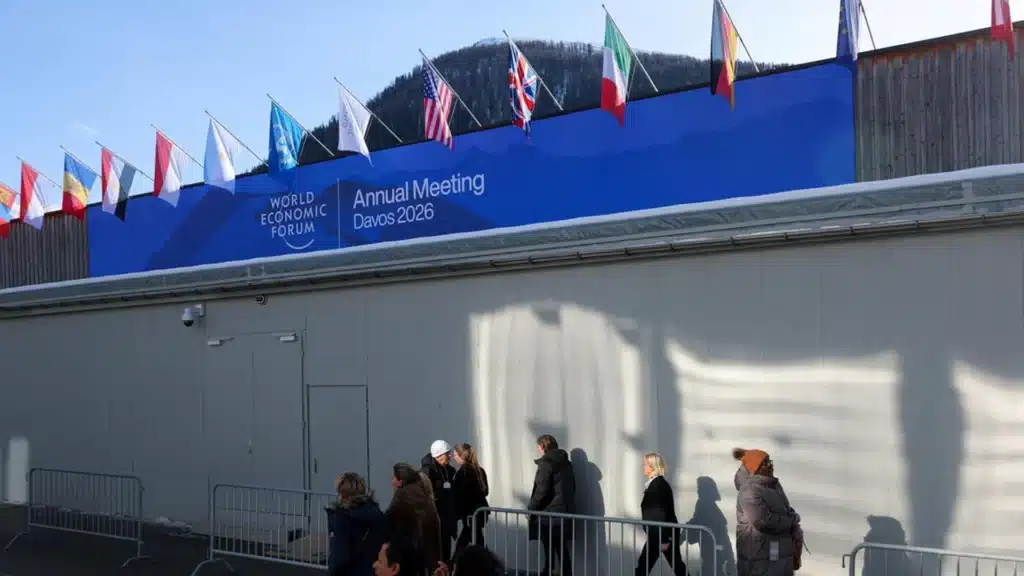
The World Economic Forum’s Davos 2026 meeting opens amid global fragmentation and shifting economic priorities.
 Tumisang Bogwasi Tumisang Bogwasi
The World Economic Forum’s Annual Meeting 2026 has officially begun in Davos, Switzerland, bringing together heads of state, central bankers, CEOs, and policymakers at a moment of heightened geopolitical tension and economic uncertainty.
Unlike earlier gatherings defined by optimism around globalization, Davos 2026 opens in a world marked by fragmented trade, persistent inflation pressures, geopolitical realignment, and rapid technological disruption.
For business leaders, the forum remains less about speeches and more about signaling, where capital, policy, and power are converging next.
The tone in Davos this year is notably restrained.
Gone are the easy assumptions of seamless globalization. Instead, conversations are shaped by:
Executives arrive focused on risk management as much as growth.
Geopolitical risk is no longer a side conversation.
Wars, sanctions, and strategic competition now directly influence:
Davos has become a venue where political risk is priced in real time.
Economic discussions at Davos reflect a divided outlook.
While some regions show resilience, others face:
The debate is shifting from short-term cycles to long-term structural change.
Artificial intelligence remains a headline topic.
But the conversation has matured beyond hype, focusing on:
The question is no longer whether AI will transform economies — but who controls the transformation.
Climate goals remain present, but pragmatism dominates.
Energy security, transition financing, and realistic pathways now take precedence over aspirational targets. Executives emphasize transition sequencing rather than abrupt shifts.
Much of Davos’ influence unfolds outside public sessions.
Private meetings, closed-door briefings, and informal negotiations often shape outcomes more than panel discussions. For many attendees, the forum is a networking and intelligence-gathering exercise.
Critics argue Davos is symbolic.
Yet symbols matter when they convene power. Davos remains one of the few spaces where government leaders and corporate decision-makers engage directly and repeatedly.
Its value lies in coordination, not consensus.
Key signals from Davos 2026 will include:
Markets often react not to declarations, but to subtle changes in language and posture.
Davos does not solve global problems.
But it reflects how elites interpret them. The 2026 gathering offers a snapshot of a world adjusting to fragmentation, recalibrating risk, and redefining growth strategies in an era where certainty is scarce.