Newsletter Subscribe
Enter your email address below and subscribe to our newsletter
Enter your email address below and subscribe to our newsletter


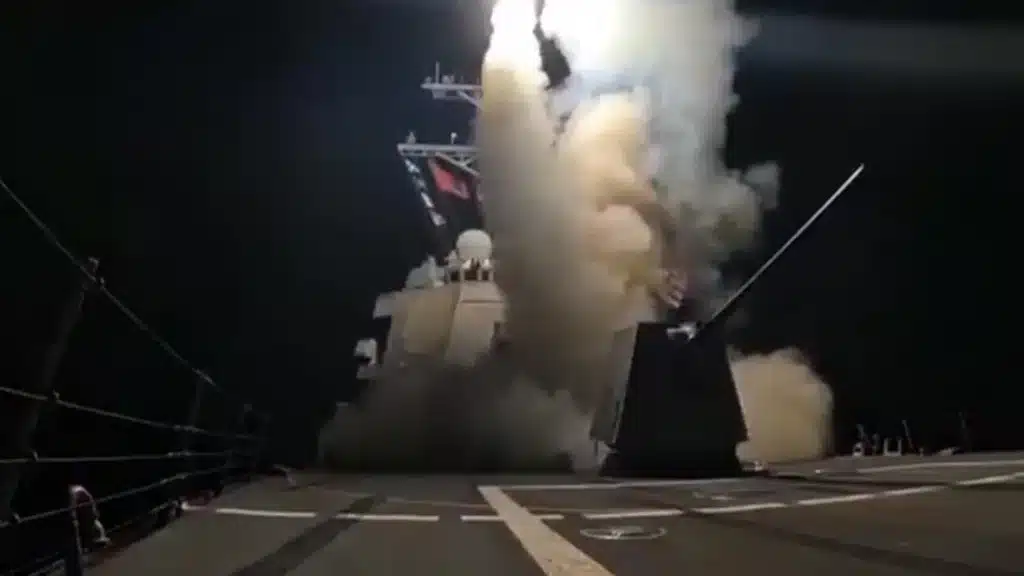
A U.S. strike on ISIS-linked militants in Nigeria underscores persistent security risks and the geopolitical stakes in West Africa.
 Tumisang Bogwasi Tumisang Bogwasi
The United States has confirmed a targeted strike against ISIS-affiliated terrorists operating in Nigeria, underscoring Washington’s continued counterterrorism engagement in West Africa.
While limited in scope, the operation carries broader implications for regional security, energy stability, and international cooperation in one of Africa’s most strategically important sub-regions.
For businesses and investors, the strike is a reminder that security dynamics in Nigeria ( Africa’s largest economy and a critical energy producer) remain closely linked to geopolitical decision-making far beyond the continent.
According to official briefings and subsequent reporting, U.S. forces conducted a precision operation targeting ISIS-affiliated elements active in Nigeria. The strike was designed to degrade leadership and operational capability rather than signal a broader military escalation.
Recent updates indicate that the operation focused on high-value targets linked to ISIS-West Africa Province (ISWAP), with an emphasis on disrupting command structures, logistics networks, and planning cells responsible for cross-border attacks.
Such actions are typically intelligence-driven and coordinated with local and regional partners, emphasizing disruption over prolonged engagement.
Nigeria is central to West African stability.
It is:
Persistent insurgency and terrorist activity in northern and northeastern regions threatens not only national stability but also cross-border trade and investment flows.
ISIS-linked groups in West Africa have evolved from localized insurgencies into networked extremist movements.
They exploit:
Nigeria’s struggle against these groups has required sustained international intelligence and operational support.
New briefings suggest the strike forms part of a wider intelligence-led campaign aimed at preventing ISIS-linked groups from regrouping after recent pressure by Nigerian and regional forces.
Analysts note increased U.S. surveillance, drone activity, and intelligence-sharing across Nigeria and the wider Lake Chad Basin.
The updates also highlight concerns that extremist groups are attempting to exploit political transitions, economic hardship, and border insecurity to reconstitute operational capacity.
The strike fits within a broader U.S. strategy focused on:
Washington has increasingly favored targeted, high-impact operations over permanent military footprints.
Security developments directly affect economic confidence.
Key considerations include:
While the strike itself does not disrupt markets, persistent instability can influence long-term investment decisions.
Nigeria continues to balance:
Effective counterterrorism requires not only force, but governance, development, and social cohesion; areas closely watched by international partners.
International Law and Sovereignty Considerations
U.S. strikes abroad often raise questions around:
Such operations are typically conducted within frameworks of bilateral or multilateral cooperation.
The U.S. strike on ISIS-linked militants in Nigeria is a tactical success, not a strategic resolution.
For Nigeria and its partners, sustained security progress will depend on regional cooperation, economic opportunity, and political stability. For businesses, vigilance remains essential in assessing risk across West Africa.