Newsletter Subscribe
Enter your email address below and subscribe to our newsletter
Enter your email address below and subscribe to our newsletter


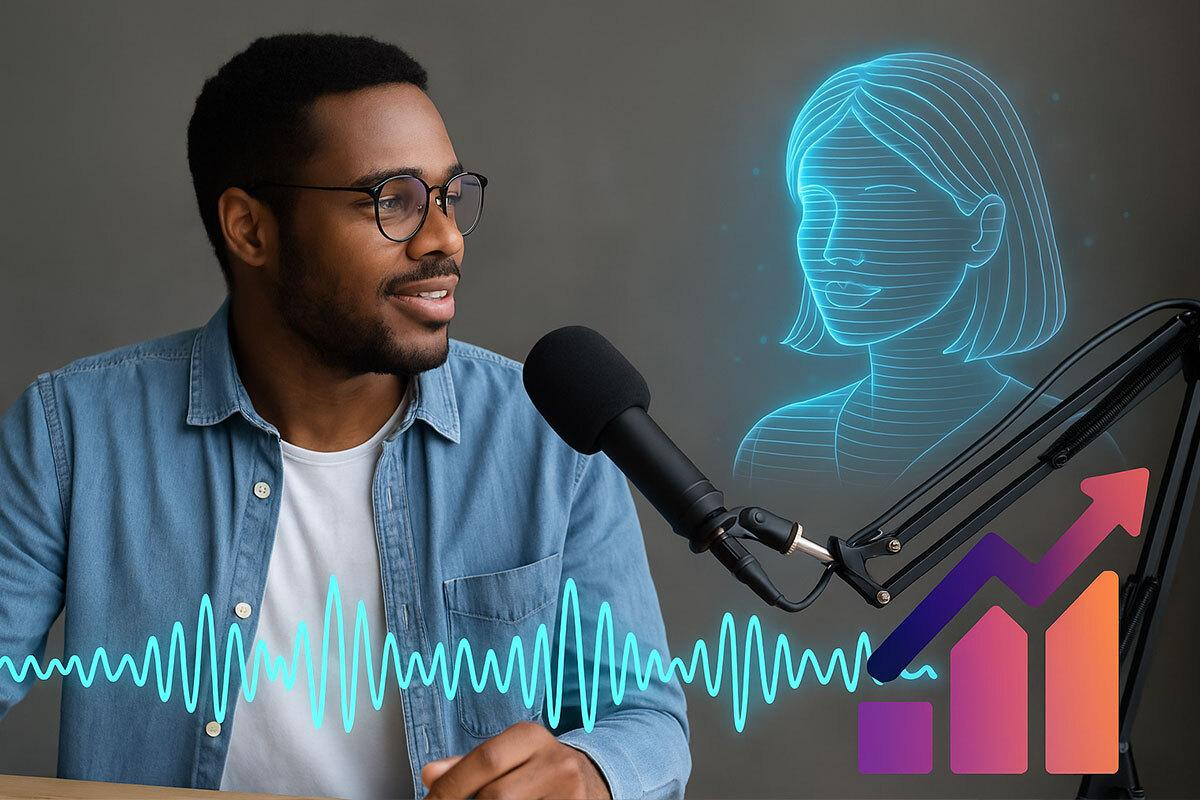
Discover how brands are leveraging AI to create powerful, memorable audio personas that build emotional connections and elevate brand recognition.
 Nonofo Joel Nonofo Joel
In an increasingly congested digital space, where imagery dominates, brands are relearning the potential of an easily forgotten sense: sound. Beyond a snappy jingle or a memorable sonic mark, businesses are creating full-fledged audio personas. This is not about generating noise; it’s a conscious and intentional process of creating an auditory identity that resonates with people, forms emotional connections, and builds long-term recognition.
This transition has been hastened by the fast-evolving nature of artificial intelligence, which is increasingly making complex audio branding more attainable and scalable than ever.
The underlying concept is straightforward: if a person were the brand, what would it sound like? Establishing and reinforcing this sound is the new marketing frontier, and AI is giving the tools to make it happen.
Sonic branding, or sound branding, is the deliberate application of sound to strengthen a brand’s identity. Though it has been around for decades as radio spots and TV jingles, its relevance has grown exponentially with the rise of podcasts, streaming media, and voice assistants. People are interacting with content and brands via their ears more than ever before, whether they’re listening to a how-to, communicating with a chatbot, or just hearing an app alert.
In order to develop a successful audio persona, a brand has to take into account a number of important things:
A well-designed audio persona gives an edge in many ways. Firstly, sound cuts through the visual clutter that overwhelms the digital environment, making it an effective tool for grabbing and retaining attention. Research indicates that sound can trigger emotion quicker and more efficiently than visuals alone, enabling brands to establish a deeper, more intimate connection with their audience.
Second, a steady audio persona creates familiarity and trust. If a customer hears the same voice and tone in a customer support announcement, a product demonstration video, and a podcast spot, it familiarizes them with the brand and makes them more trusting. This familiarity is important for creating brand recall and loyalty. A listener who is able to immediately associate a brand with their voice is a highly invested listener.
Lastly, an audio persona offers a route to scalability. Voiceover production is labor-intensive and costly, involving the process of casting, recording sessions, and editing. AI technologies are simplifying it, enabling brands to create large volumes of top-quality audio content at will. This is especially useful for global campaigns that require localizing into a variety of languages and yet must retain one brand voice.
The arrival of AI voice technology has effectively leveled the playing field for the development and deployment of audio personas. The tech examines a voice and can manipulate it to conform to given parameters, or even copy it to produce a completely synthetic equivalent. This creates a universe of new possibilities:
The audio branding future is about enabling brands to make more connections. With voice-activated technology increasingly woven into our lives, the audio persona of a brand will be as important as its visual logo. The intentional application of AI voice changers and other emerging technologies is changing what’s possible, enabling brands to step into a richer, more emotive, more memorable world of sound.