Newsletter Subscribe
Enter your email address below and subscribe to our newsletter
Enter your email address below and subscribe to our newsletter


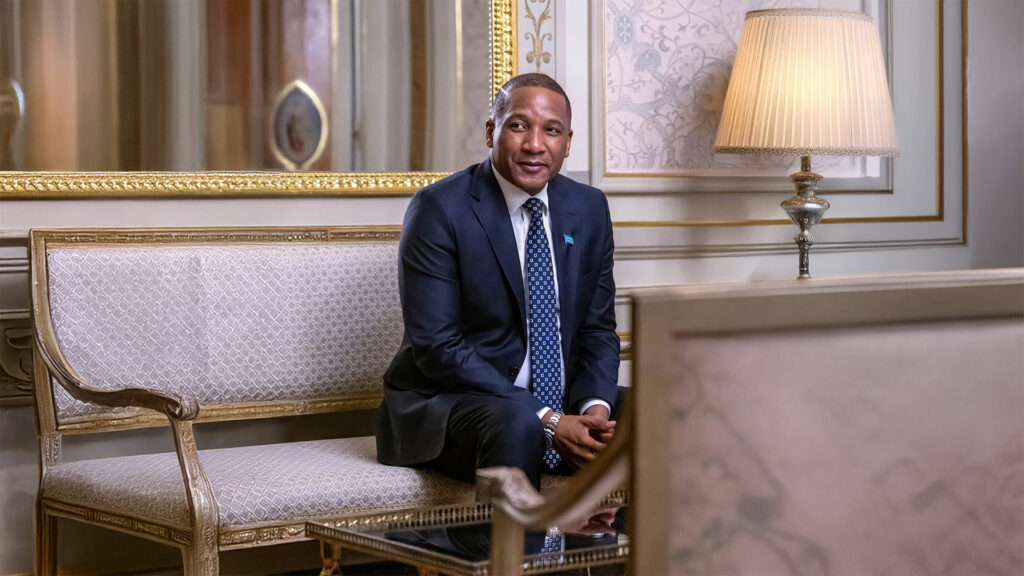
Investors see both risk and promise in Duma Boko's Botswana as the nation pivots from mining to modern, diversified industries.
 Tumisang Bogwasi Tumisang Bogwasi
In one of the most significant political upheavals in modern African history, Duma Boko—a 55-year-old Harvard-trained constitutional lawyer—defied the odds and became the President of Botswana in October 2024, toppling a ruling party that had held power uninterrupted since the country’s independence in 1966.
In doing so, he sent a powerful signal across the continent and the global investment community: Botswana is ready for structural reform, political renewal, and economic diversification.
Duma Boko has been named one of Time’s 100 Most Influential People of 2025.

Botswana has long been praised as one of Africa’s most stable democracies. But that reputation masked growing voter discontent over elite entrenchment, economic stagnation, and a sense that national resources served foreign interests more than local livelihoods.
The Botswana Democratic Party (BDP)—which had governed since 1966—faced mounting criticism over opaque diamond deals and rising inequality.
In the October 2024 elections, the Umbrella for Democratic Change (UDC), led by Boko, capitalized on this frustration. The victory was a political win and a generational shift that broke the myth of BDP invincibility.
Botswana is the world’s top producer of gem-quality diamonds, and over 80% of its foreign exchange earnings come from the industry. However, the diamond sector has faced a double bind:
As diamond exports dwindle, the nation faces the same question confronting other commodity-dependent economies: What comes next?
Duma Boko’s campaign rhetoric was bold, but the realities of governance are sobering. His plan to double the minimum wage and expand social welfare programs must be balanced against declining revenues. Yet, the President is undeterred. In his own words:
“We can no longer afford to depend on a single commodity.”
Boko has earmarked cannabis legalization and export and solar energy infrastructure as pillars of a new economic model. Botswana’s year-round sunlight and open landscapes make it ideal for solar investments, while global demand for medical cannabis continues to rise.
These sectors are not only viewed as economic lifelines but also as tools for job creation and small business development, which are key to addressing Botswana’s youth unemployment crisis.
The international investment community is closely watching Botswana. Boko’s ascent represents both opportunity and uncertainty:
Still, early signals indicate a government committed to establishing transparent, rules-based frameworks that promote long-term partnerships.
Botswana’s reform will not be easy. The country must manage its fiscal position, restructure key contracts, and woo foreign investors without compromising sovereignty. International development partners, such as the International Monetary Fund (IMF), the World Bank, and the African Development Bank, are likely to play essential roles in providing technical support and budgetary relief.
Crucially, Boko must maintain the trust of a public that voted for transformation, not mere transition. His administration’s credibility will hinge on delivering real economic change within a narrow window of political goodwill.