Newsletter Subscribe
Enter your email address below and subscribe to our newsletter
Enter your email address below and subscribe to our newsletter


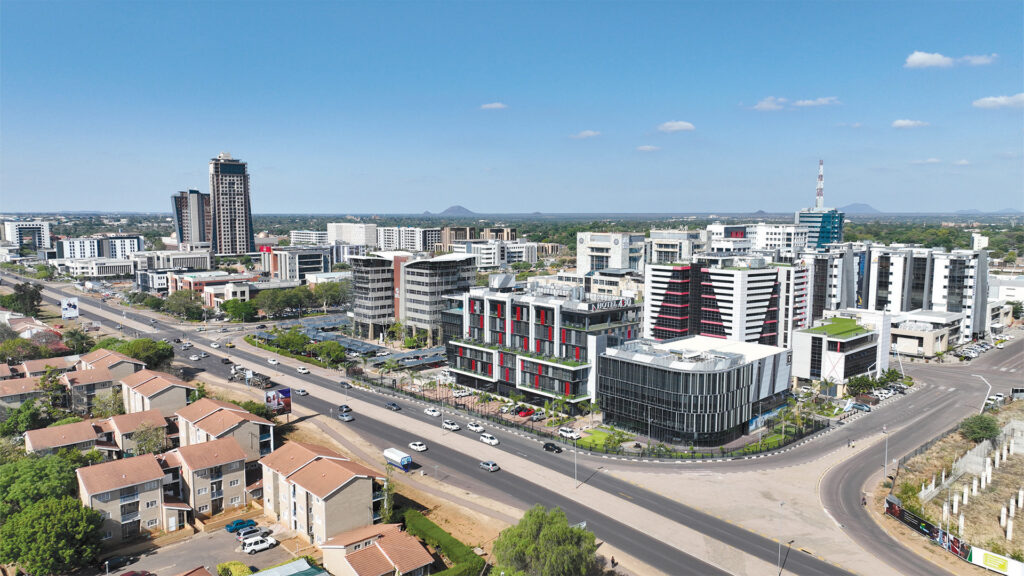
Botswana receives a 37% reciprocal tariff under Trump’s Liberation Day reforms—here’s what it means for Africa.
 Tumisang Bogwasi Tumisang Bogwasi
President Donald Trump’s ‘Liberation Day‘ address marked a bold turn in global trade dynamics, especially for African nations navigating a world increasingly defined by bilateralism over globalism. Among the key data points unveiled was Botswana’s new 37% reciprocal tariff rate—one of the many recalibrations the Trump administration plans to implement in pursuit of fairer trade relationships.
This shift presents both a challenge and an opportunity for Botswana and, by extension, other African economies. In a political climate increasingly hostile to globalist ideology, the call for sovereign trade models resonates strongly with capitalists, entrepreneurs, and policymakers across the continent.
President Trump’s 2025 policy agenda draws a clear line in the sand: Nations must stand on equal footing, no longer shielded by preferential treatment or unconditional aid. The 37% tariff rate assigned to Botswana signals that trade must be reciprocal. As reported by USTR on AGOA, traditional frameworks like AGOA will now be measured against mutual benefit rather than geopolitical charity.
Botswana must innovate and compete—not as a dependent partner but as a worthy equal in global commerce.

Trump’s speech emphasized the failures of multilateral trade systems that, in his view, have enabled one-sided advantages. His administration’s response? A recalibration of tariffs to reflect parity.
For Botswana, the 37% tariff is not a penalty—it’s a benchmark. It represents America’s valuation of what a balanced trade relationship should look like. According to Trump, since Botswana charges 74% on U.S. exports, America will respond with half that rate: 37%—a fair, proportional reply.
| No. | Country | Tariff on U.S. Goods | U.S. Tariff on Country |
|---|---|---|---|
| 1 | Botswana | 74% | 37% |
In light of this, Botswana-based firms should assess cost structures, focus on quality upgrades, and seek market diversification strategies.
According to Brookings Africa, Africa’s overreliance on aid has weakened institutional agility. Liberation Day’s new policy direction could spur reforms:
By cutting dependence, nations like Botswana can build capacity from the inside out.
As Trump distances the U.S. from globalist bureaucracies like the UN, WHO, and WTO, he simultaneously opens the door for nations ready to negotiate directly.
For Botswana’s trade representatives, this is a strategic invitation:
In response to Western retraction, intra-African trade becomes more attractive. The African Continental Free Trade Area (AfCFTA) allows countries like Botswana to:
President Trump’s Liberation Day speech is not anti-African; it is anti-dependency. The new 37% tariff on Botswana underscores a new trade era rooted in equity, merit, and mutual respect.
Africa now stands at a crossroads: to cling to old systems of aid and favoritism—or to rise with vision, strategy, and sovereignty.
Africa’s hour has come. Those who prepare will prosper.