Newsletter Subscribe
Enter your email address below and subscribe to our newsletter
Enter your email address below and subscribe to our newsletter



President Trump’s 'Liberation Day' speech could empower Africa to reshape trade on its own terms.
 Tumisang Bogwasi Tumisang Bogwasi
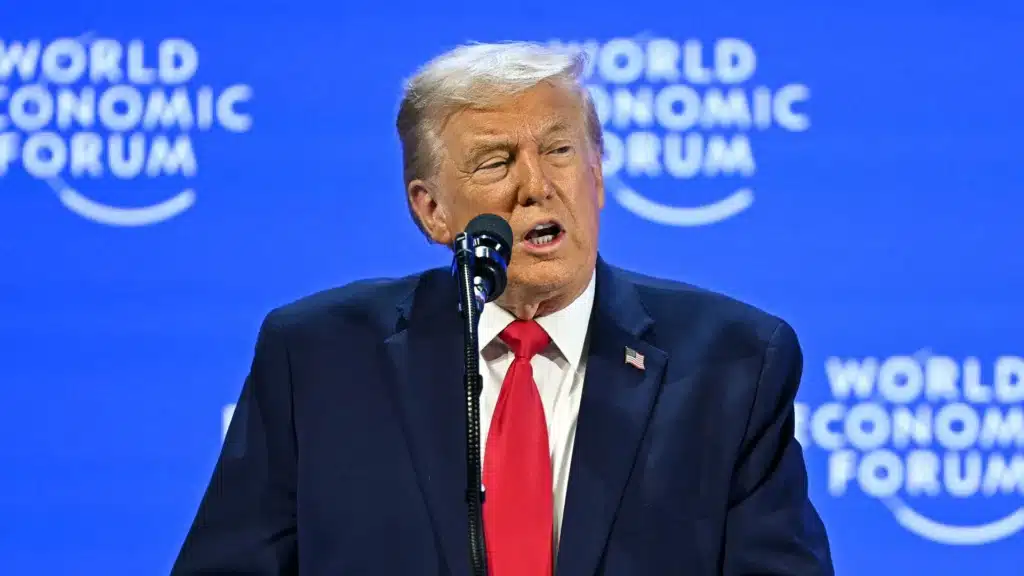
President Donald Trump’s highly anticipated ‘Liberation Day‘ speech in his ongoing administration outlined a bold and unapologetically nationalistic agenda to restore American sovereignty and economic independence.
While the core message focused on revitalizing U.S. industry and reducing foreign dependence, the implications stretch beyond U.S. borders—particularly impacting African nations. For many African leaders advocating for sovereignty and fair trade, this pivot may represent a long-overdue correction in the global economic order.
Trump’s vision centers on correcting trade imbalances that have historically disadvantaged the U.S. His emphasis on fair, reciprocal trade deals sends a clear signal: America will no longer subsidize global systems that do not serve its national interest.
For Africa, this may not be a threat but an opportunity—a chance to stand on its own two feet. By reducing reliance on preferential U.S. trade frameworks, African countries can reorient toward self-sufficiency and stronger intra-continental trade ties.
African leaders must embrace this moment to negotiate deals that benefit their citizens, build industrial capacity, and reject dependency-based development models.
Trump’s consistent stance on immigration—framed around security and national interest—will likely mean fewer immigration opportunities for illegal Africans seeking work, study, or asylum in the U.S. While restrictive, these policies also challenge Africa to invest in its own talent and education systems.
The brain drain from Africa to the West may slow down, encouraging skilled Africans to contribute to their home countries.
Trump’s approach reframes development aid as transactional and interest-based. This departure from unconditional aid forces African governments to make their investments in health, education, and infrastructure.
This shift is a call to action for self—determined Africans to reclaim agency, reform institutions, and build economies that serve African people first.
Trump’s apparent disdain for globalist structures such as the UN, WHO, and WTO underscores a pivot to direct, interest-aligned diplomacy. For Africa, this creates an opening for assertive countries to cut customized deals based on value, not virtue-signaling.
This model favors strong, visionary African leaders prepared to negotiate strategically and place national interest at the forefront.
Charts released by the Trump administration highlight many nations’ uneven trade tariffs on U.S. exports. Africa is no exception. Trump’s reciprocal tariff policy may compel fairer trade structures.
| Country | Tariffs Charged to U.S. | U.S. Reciprocal Tariff |
| Angola | 63% | 32% |
| Botswana | 74% | 37% |
| Ethiopia | 10% | 10% |
| Ghana | 17% | 10% |
| Kenya | 10% | 10% |
| Lesotho | 99% | 50% |
| Madagascar | 93% | 47% |
| Mauritius | 80% | 40% |
| Mozambique | 31% | 16% |
| Namibia | 42% | 21% |
| Nigeria | 27% | 14% |
| Senegal | 10% | 10% |
| South Africa | 60% | 30% |
| Tanzania | 10% | 10% |
| Togo | 10% | 10% |
| Uganda | 20% | 10% |
| Zambia | 33% | 17% |
| D.R. Congo | 22% | 11% |
| Algeria | 59% | 30% |
| Morocco | 10% | 10% |
These tariff re-alignments push Africa to modernize its trade structures and enter deals that reflect mutual respect and fairness—true hallmarks of sovereign capitalism.
The Brookings Institution notes the dependency created by programs like AGOA. Trump’s pushback may catalyze a shift toward diversified partnerships with the AfCFTA, China, India, and even BRICS. This moment is not about isolation but independence and smart alignment.
President Trump’s ‘Liberation Day’ speech is a clear message to the world: America will no longer participate in global systems that undermine its sovereignty. For Africa, this isn’t bad news—it’s a wake-up call.
It is time to:
Those with a vision for an independent Africa will see this moment not with fear but with anticipation.