Newsletter Subscribe
Enter your email address below and subscribe to our newsletter
Enter your email address below and subscribe to our newsletter


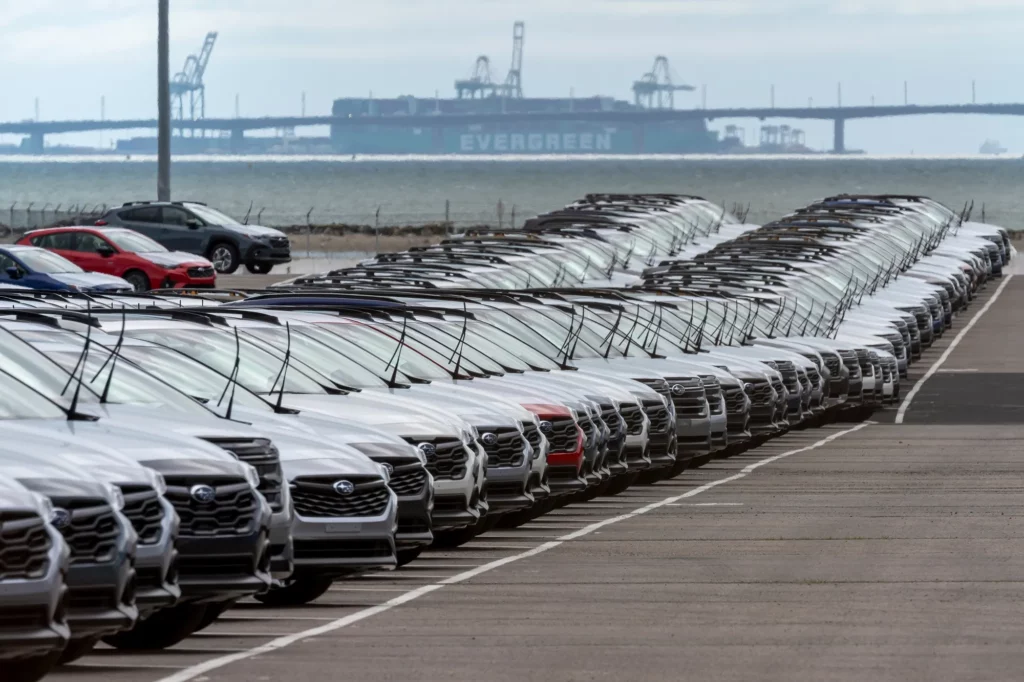
Trump slaps 25% tariffs on car imports, reigniting U.S. manufacturing and putting foreign producers on notice.
 Tumisang Bogwasi Tumisang Bogwasi
In a bold and strategic move aligned with his “America First” agenda, President Donald Trump has announced 25% tariffs on imported cars and light trucks, effective April 3, 2025.
The initiative, long championed by the administration, is intended to revitalize U.S. manufacturing, protect American jobs, and correct decades of trade imbalance. Far from protectionist posturing, this is a decisive play to reassert U.S. industrial strength and national sovereignty in global commerce.
President Trump’s tariff decision is more than a trade maneuver—it’s a return to principled economic nationalism. With $474 billion in auto imports in 2024, the U.S. has long subsidized the prosperity of others at the expense of its own working class. Trump’s tariffs aim to reverse that trajectory and place American workers and industries first.
“We’re going to charge countries for doing business in our country and taking our jobs… They’ve taken so much from us,” Trump said from the Oval Office.

Yes, global auto stocks slumped. But disruption is the price of change. Automakers heavily reliant on cheap foreign labor and overseas supply chains—like Toyota, Mazda, Hyundai, and Volkswagen—have the most to lose. And rightly so. The shift incentivizes them to invest on American soil, where workers deserve better wages and job security.
As UAW President Shawn Fain stated, this is a “major step in the right direction.” The tariffs are expected to pressure automakers to relocate production to the U.S., creating union jobs and restoring the backbone of American manufacturing.
This isn’t just about economics—it’s about national dignity and strategic independence. Foreign reliance on parts and products essential to the American economy leaves the nation vulnerable. Trump’s policy corrects that course.

Criticism from Canada, the EU, and Brazil was swift—but predictable. President Trump responded with a clear message: retaliate, and the U.S. will escalate further.
“If the European Union works with Canada in order to do economic harm to the USA, large-scale tariffs, far larger than currently planned, will be placed on them both.” — Trump on Truth Social

For too long, allies have exploited American generosity. That era is ending.
Analysts warn of rising prices and reduced demand—but this assumes static supply chains. Trump’s bet is that companies will adapt, invest domestically, and cut long-term costs by removing the overhead of global complexity.
And for Tesla? Even Elon Musk, who expressed concerns, acknowledged tariffs’ reshaping effect on supply chains. Long-term, self-reliance will serve American EV leaders better than global dependency.
This auto tariff is the latest in a string of assertive policies from the Trump administration:
This is the framework of economic patriotism: use America’s unmatched consumer market as leverage to demand fair trade, dignity for workers, and national resilience.
Markets may reel. Allies may retaliate. But Trump’s directive is clear: the U.S. will no longer tolerate one-sided trade relationships. The April 3 implementation date will mark a watershed moment in global commerce.
And with reciprocal tariffs expected on April 2, this is only the beginning.