Newsletter Subscribe
Enter your email address below and subscribe to our newsletter
Enter your email address below and subscribe to our newsletter


Trump pauses tariffs on Canada and Mexico for 30 days—what does this mean for global trade? Read the latest analysis.
 Tumisang Bogwasi Tumisang Bogwasi
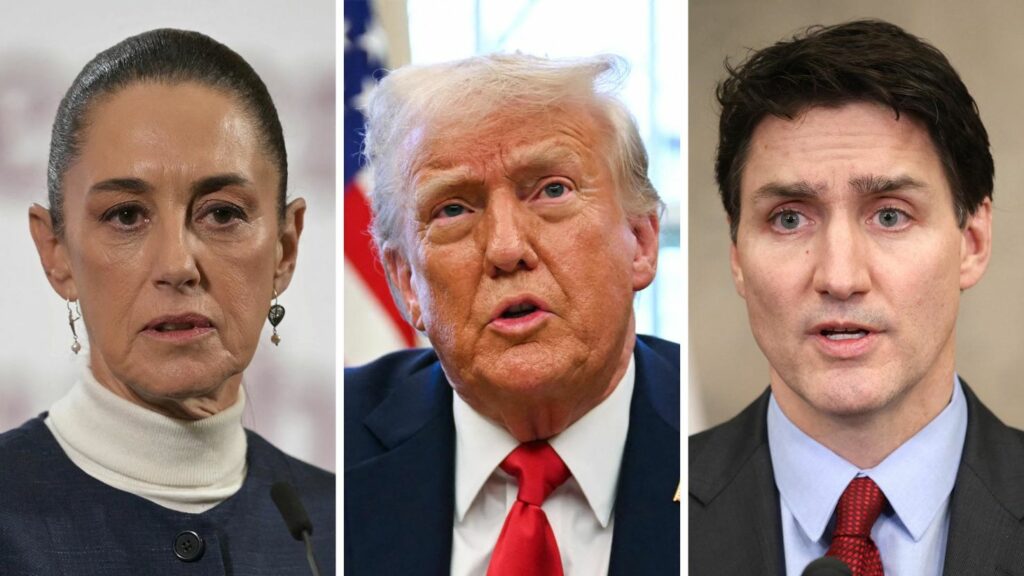
President Donald Trump has agreed to a 30-day pause on his tariff threats against Canada and Mexico, following commitments from both countries to address his concerns over border security and drug trafficking.
This temporary suspension offers a brief cooling-off period after a tumultuous series of events that had pushed North America to the brink of a trade war.
While this delay alleviates some immediate economic concerns, the risk of renewed tariffs remains, as Trump continues to leverage them as a negotiating tool. The 10% tariff on Chinese imports, however, remains set to go into effect as scheduled, adding uncertainty to global markets.
In response to U.S. tariff threats, Canadian Prime Minister Justin Trudeau announced a set of commitments aimed at addressing Trump’s concerns. These include:
This agreement temporarily shields Canada from tariffs, but ongoing diplomatic efforts will be crucial to ensuring long-term economic stability.
Similarly, Mexican President Claudia Sheinbaum took swift action to prevent tariffs from taking effect. As part of the agreement, Mexico committed to:
Mexico’s swift response helped de-escalate trade tensions, although uncertainties remain about whether these measures will fully satisfy U.S. demands.
Despite the pause on North American tariffs, the 10% tariff on Chinese imports is set to take effect as scheduled. Trump has signaled that his administration is ready to take a harder stance on Chinese trade practices, emphasizing that if a fair deal is not reached, tariffs will escalate further. Read more on the impact of tariffs on China.
This move could have significant economic consequences, including higher costs for consumer electronics, automobiles, and manufacturing supplies. As a result, businesses are stockpiling Chinese goods in anticipation of price hikes.
The announcement of the tariff pause provided temporary relief for financial markets, with stocks stabilizing after initial volatility. However, uncertainty persists as businesses brace for potential renewed tariff threats and increased supply chain disruptions.
Retailers and importers are particularly concerned, as higher costs on Chinese goods could lead to inflation and lower consumer spending.
Several economic think tanks, including the Tax Foundation and the Peterson Institute for International Economics, warn that extended tariffs could slow economic growth and lower household incomes.
The pause in tariffs represents a temporary diplomatic victory for Canada and Mexico, but tensions remain high. Trump has hinted at additional tariffs on European imports, potentially broadening the scope of his trade war strategy (Trump’s global tariff plans).
Meanwhile, domestic political reactions have been mixed. Democratic leaders criticized the tariff threats as reckless, arguing that they undermine economic stability. On the other hand, Trump’s base sees this as a demonstration of his commitment to America-first policies.
The 30-day window allows Canada and Mexico to implement their commitments, but if Trump deems their efforts insufficient, he could reintroduce tariffs, sending markets into further turmoil. Additionally, negotiations with China remain volatile, with Trump suggesting further tariff hikes if no deal is reached.
Businesses, policymakers, and consumers are now left navigating an uncertain economic landscape, balancing potential trade disruptions with the hope that diplomacy prevails. Read more on the future of U.S. tariffs.
While the temporary tariff pause on Canada and Mexico provides some relief, it does not guarantee long-term stability. The global economy remains on edge, and the next few weeks will determine whether this trade war de-escalates or reignites.