Newsletter Subscribe
Enter your email address below and subscribe to our newsletter
Enter your email address below and subscribe to our newsletter


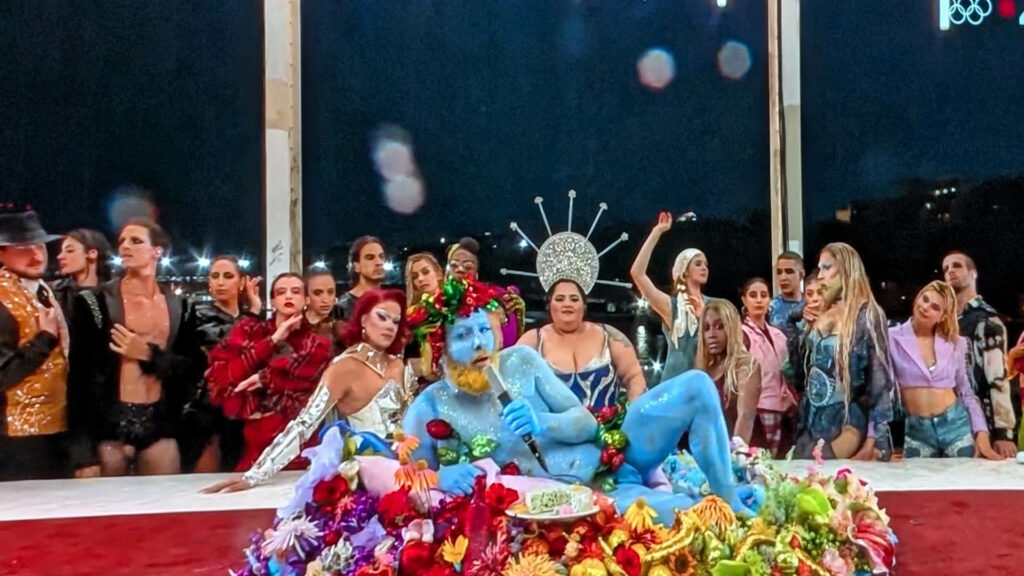
The Paris Olympics opening ceremony faces backlash over a controversial 'The Last Supper' parody featuring drag queens, prompting criticism from religious leaders.
 Tumisang Bogwasi Tumisang Bogwasi
Paris – The opening ceremony of the 2024 Paris Olympics has ignited a wave of controversy and backlash for its portrayal of Leonardo da Vinci’s iconic painting “The Last Supper.”
The performance featured a “drag queen” depiction, which many viewed as disrespectful to religious beliefs, particularly within the Christian community.
The ceremony’s depiction of “The Last Supper” was met with widespread criticism, particularly from religious communities. The Catholic Church of France voiced its regret over the portrayal, stating that it mocked Christianity.
Similarly, figures like Marion Marechal, a far-right French member of the European Parliament, and French lawyer Fabrice di Vizio condemned the performance, with di Vizio announcing plans to file a complaint.
Prominent religious leaders, including Bishop Robert Barron and Archbishop Charles Scicluna, also criticized the ceremony. Bishop Barron described the portrayal as a “disgusting, arrogant mockery,” while Archbishop Scicluna expressed his dismay in a social media post.
The incident has sparked a broader debate about respect for religious beliefs and the boundaries of artistic expression. Jean-Luc Melenchon, leader of the left-wing party France Unbowed (LFI), also disapproved of the mockery, questioning the need to offend believers. The Middle East Council of Churches and Egypt’s Al-Azhar also condemned the mockery of Jesus Christ during the ceremony.
The International Olympic Committee (IOC) issued an apology, stating that the intention was to promote tolerance and community, not to offend any religious group.
The controversy has broader implications for the intersection of cultural expression and commercial interests. C Spire’s decision to pull its advertisements highlights the potential for brand and corporate responses to cultural controversies.
The incident also underscores the ongoing tensions between secularism and religious respect in global events.
The Paris Olympics opening ceremony has sparked a significant backlash, raising questions about the limits of artistic expression and the respect for religious beliefs. As the debate continues, the incident serves as a reminder of the cultural sensitivities that global events must navigate