Newsletter Subscribe
Enter your email address below and subscribe to our newsletter
Enter your email address below and subscribe to our newsletter


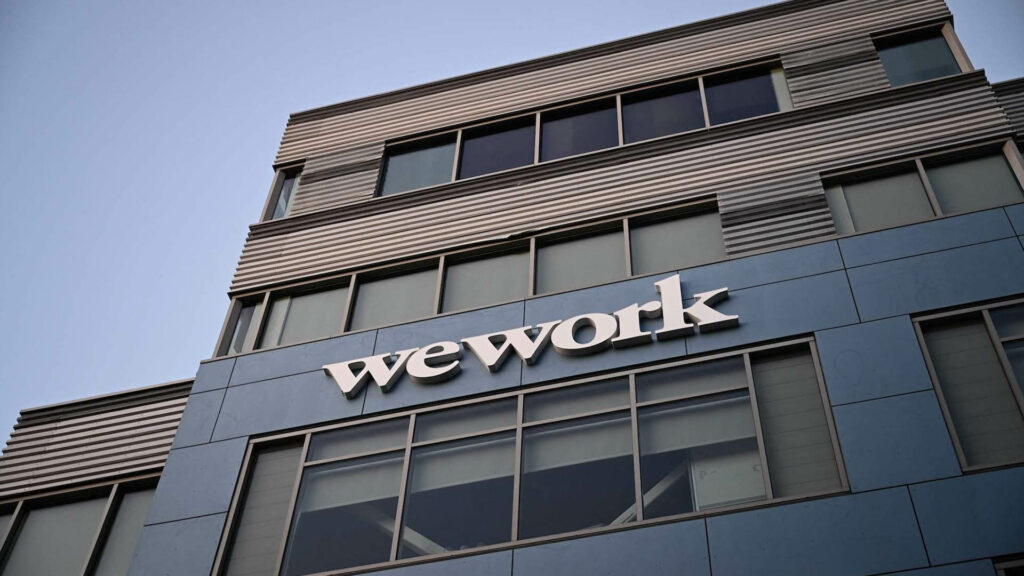
WeWork shares have fallen to an all-time low after the company failed to make payments on $95 million in debt, intensifying fears about its financial health and casting further doubt on its long-term survival.
 Tumisang Bogwasi Tumisang Bogwasi
| Getting your Trinity Audio player ready... |
WeWork, a prominent player in the shared office space rental industry, has sent shockwaves through the business world with its recent announcement that it will not be making interest payments totaling approximately $95 million.
These payments, due on Monday, comprise $37.3 million in cash and $57.9 million in additional payment-in-kind (PIK) notes. This unsettling news has resulted in a significant drop in WeWork's stock price, which has reached an all-time low.
WeWork, which asserts that it has the financial capacity to meet these obligations, has invoked the 30-day grace period provided under the notes' indentures.
During this grace period, the company aims to engage in discussions with key stakeholders within its capital structure. Simultaneously, WeWork intends to enhance its liquidity, aligning with its ongoing efforts to implement a strategic plan.
This development follows WeWork's revelation two months ago that it had raised "substantial doubt" regarding its ability to continue as a going concern. The company cited a range of issues, including financial losses, projected cash requirements, increased member turnover, and concerning liquidity levels.
To secure its future, WeWork must navigate several challenges, including the reduction of rent and tenancy costs, revenue growth, cost containment, capital expenditure control, and the exploration of additional capital sources through debt or equity issuance, as well as asset sales.
In light of these financial concerns and the missed interest payments, WeWork's shares faced a substantial decline, losing approximately 14% of their value during Tuesday's trading session.
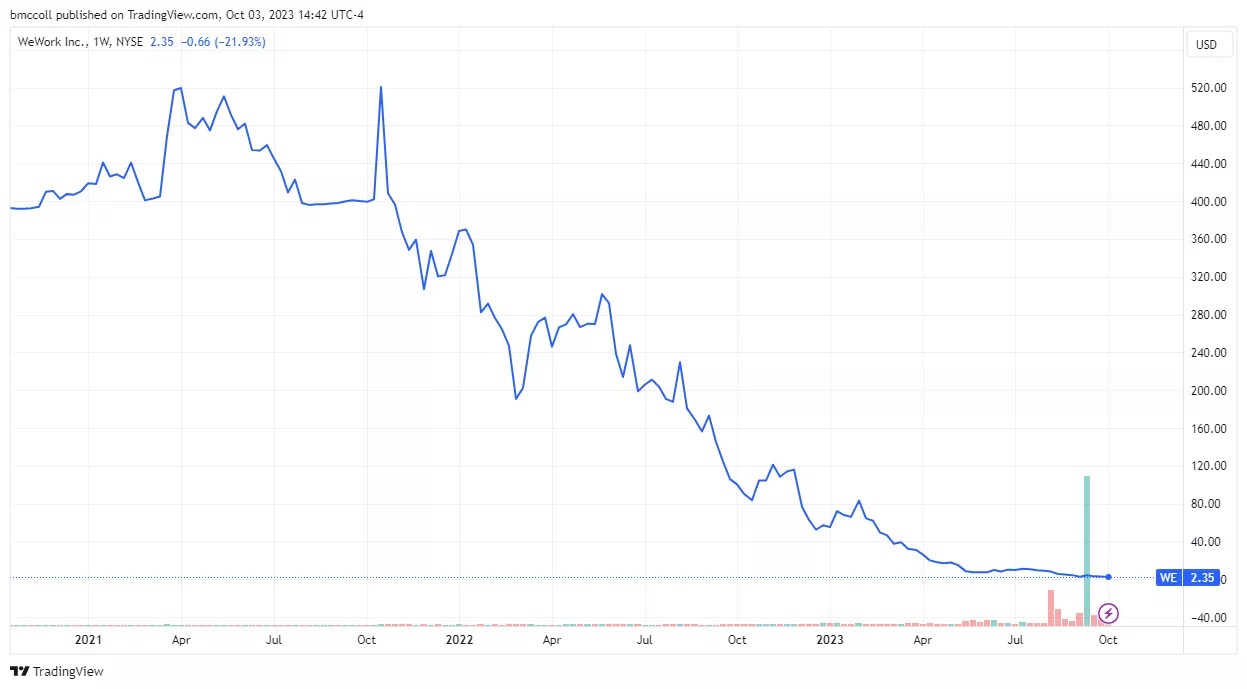
This development underscores the broader challenges facing the shared office space rental industry and raises questions about WeWork's ability to overcome its current financial turmoil.
As the company embarks on discussions with stakeholders and looks to stabilize its liquidity, the business world watches closely, aware of the significant implications for the future of the industry and WeWork itself.